

Why collect custom pins: benefits for businesses, events
Custom pins deliver surprising returns that most businesses overlook. Custom pins improve employee satisfaction by up to 15% when used for recognition and foster customer loyalty with 84% of recipients more likely to purchase. Yet many dismiss them as cheap swag. This article reveals why custom pins matter for businesses building culture, event planners creating memorable experiences, and collectors seeking lasting value. You’ll discover how strategic pin programs transform employee engagement, why limited editions generate event buzz, and what separates collectible pins from disposable merchandise.
Table of Contents
- The Business Case For Collecting Custom Pins
- Custom Pins As Essential Tools For Event Planners
- Collecting Custom Pins: Value Beyond The Merchandise
- Design And Production Essentials For Effective Custom Pins
- Explore Custom Pins For Your Brand, Event, Or Collection
- FAQ
Key takeaways
| Point | Details |
|---|---|
| Business impact | Pins boost employee satisfaction by 15% and increase customer purchase intent by 84% when used strategically |
| Event value | Limited edition pins create exclusivity, drive repeat attendance, and serve as conversation starters that amplify engagement |
| Design quality | Production constraints like minimum line widths and color separation directly impact pin effectiveness and manufacturability |
| Collector appeal | Limited editions and artist designs hold lasting value but require proper storage to prevent damage and counterfeits |
| Strategic use | Custom pins work across business branding, event marketing, and personal collecting when designed with clear purpose |
The business case for collecting custom pins
Businesses that integrate custom pins into recognition programs see measurable improvements in workplace culture and customer relationships. Custom pins improve employee satisfaction by up to 15% when used for recognition and foster customer loyalty with 84% of recipients more likely to purchase. These aren’t vanity metrics. When employees receive pins celebrating milestones, project completions, or years of service, they display them proudly on lanyards, bags, and jackets, creating visible symbols of achievement that reinforce company values daily.
Recognition programs using pins tap into fundamental human psychology. Physical tokens carry weight that digital badges cannot match. A sales team member who earns a pin for closing a major deal wears that accomplishment into every meeting. Colleagues notice, ask questions, and the pin becomes a conversation starter that spreads positive culture organically. This visibility creates aspirational motivation for others while validating the recipient’s contribution in a tangible way.
Customer loyalty programs benefit equally from strategic pin distribution. Brands like Starbucks and Disney have proven that collectible pins transform casual customers into engaged advocates. When you give customers limited edition pins tied to purchases, events, or milestones, you create emotional connections that transcend transactional relationships. Recipients don’t just remember your brand, they actively display it and often seek additional pins to complete collections, driving repeat business naturally.
Effective business pin campaigns share common characteristics. They tie directly to brand identity through thoughtful design incorporating logos, colors, and messaging. They celebrate specific achievements rather than generic participation. They’re distributed strategically at moments of high emotional engagement like product launches, anniversaries, or team victories. Custom pins boost branding impact when designed with these principles.
Consider a software company that creates unique pins for each major product release. Development teams receive exclusive versions before public launch, creating insider status and pride. Customer pins distributed at release events become collectibles that spark conversations and social media sharing. The cost per pin remains low while the marketing and morale value compounds over time as collections grow.
Pro Tip: Structure pin programs with tiered rewards to maximize motivation. Bronze, silver, and gold variants for different achievement levels create clear progression paths that employees and customers actively pursue, driving sustained engagement.
Custom pins as essential tools for event planners
Event planners face constant pressure to create memorable experiences that justify attendance and encourage return visits. Custom pins solve multiple challenges simultaneously by serving as giveaways, engagement tools, and lasting mementos. Event planners use custom pins as memorable giveaways, conversation starters, and collectibles that enhance engagement and create lasting memories. Unlike brochures that get discarded or digital swag that disappears into inboxes, pins travel with attendees long after events end.
The psychology behind event pins centers on exclusivity and social proof. When you attend a conference and receive a limited edition pin available only to participants, you gain tangible proof of participation that others recognize. Wearing that pin to future industry events signals insider status and creates natural conversation openings with fellow attendees who recognize the design. This social currency transforms passive attendees into active brand ambassadors.
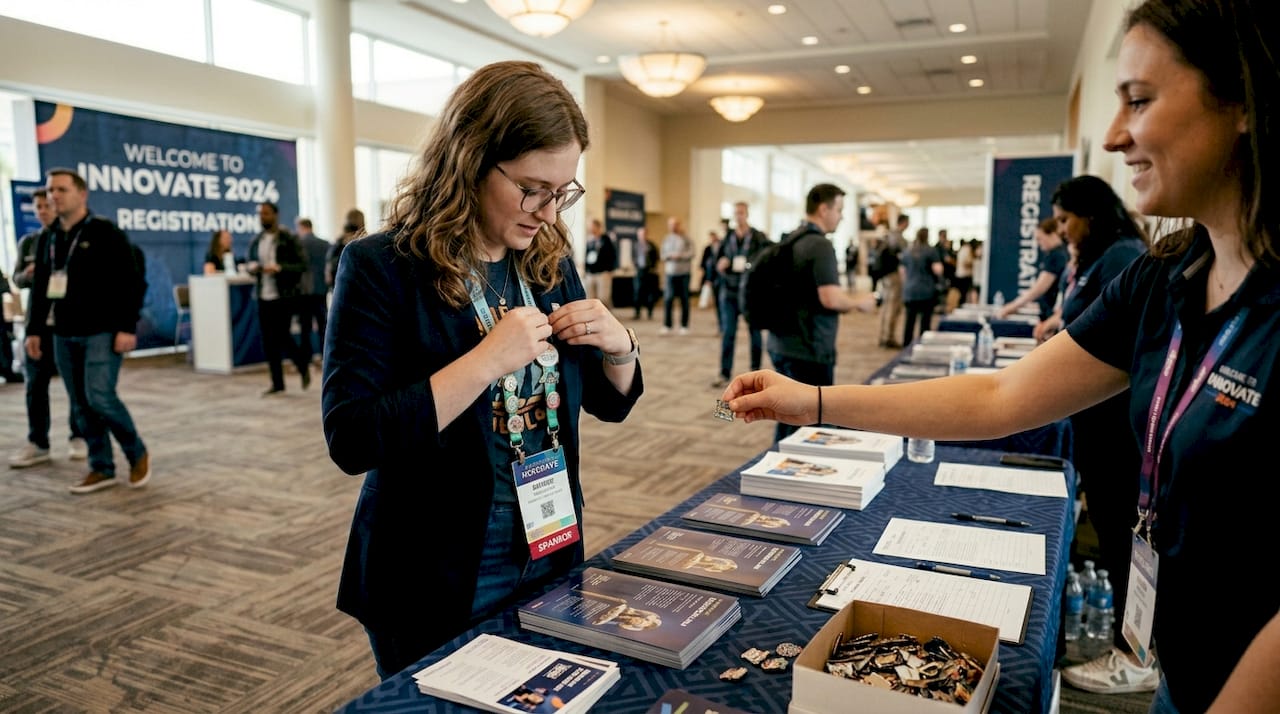
Limited edition strategies amplify this effect dramatically. Create different pin designs for each day of a multi-day conference, and attendees must attend all sessions to complete the set. Offer exclusive variants for VIP ticket holders or early registrants, and you incentivize both upgrades and prompt decision making. The scarcity principle drives collection behavior that increases perceived event value and encourages repeat attendance at future editions.
Successful event pin strategies share these elements:
- Design reflects event theme or location with specific visual references
- Distribution timing creates anticipation and rewards engagement
- Limited quantities generate urgency and trading behavior
- Quality construction ensures pins remain wearable keepsakes
A music festival that creates unique pins for each year builds collector culture that spans decades. Attendees display complete collections as badges of loyalty, creating visual timelines of their festival history. New attendees see these collections and aspire to build their own, driving ticket sales for future years. The initial pin investment pays dividends through sustained community building.
Custom pins boost event engagement when paired with strategic distribution. Consider these implementation steps:
- Design pins 3-4 months before your event to allow production time
- Create scarcity by limiting quantities to 80-90% of expected attendance
- Distribute pins at high-value moments like keynote sessions or exclusive parties
- Encourage trading by producing multiple variants with different designs
- Document collections on social media with event-specific hashtags
- Offer redemption programs where complete sets unlock future benefits
Pairing pins with complementary swag creates layered engagement opportunities. A tote bag becomes more valuable when attendees can customize it with pins collected throughout the event. A lanyard gains personality when decorated with pins from multiple years of attendance. This synergy between products increases perceived value of entire swag packages while keeping individual item costs manageable.
Collecting custom pins: value beyond the merchandise
Individual collectors approach custom pins with passion that transforms simple accessories into cultural artifacts. Limited edition releases from artists, brands, and events create secondary markets where rare pins trade for multiples of original prices. Limited editions and trading add collectible value for events and collectors, but fakes pose risks and experts emphasize quality storage and display to prevent damage.
The appeal stems from multiple factors beyond aesthetics. Artist-designed pins function as affordable art that collectors can wear and display. Limited production runs create scarcity that drives value appreciation over time. Trading communities add social dimensions that transform solitary collecting into shared experiences. Pins documenting specific moments, places, or cultural movements become historical records that gain significance as years pass.
Collectors face real risks that require vigilance. Counterfeit pins flood online marketplaces, mimicking popular designs with inferior materials and construction. These fakes damage both collectors who overpay for worthless items and original artists who lose revenue and reputation. Authenticating pins requires knowledge of production techniques, backing stamps, and seller reputation that newcomers often lack.
Physical damage threatens even authentic collections. Enamel chips when pins fall or collide during storage. Metal oxidizes when exposed to humidity. Colors fade under direct sunlight. Clutch backs loosen over time, creating loss risks. These vulnerabilities mean proper care directly impacts long-term value preservation.
| Pin Type | Primary Appeal | Care Requirements | Value Retention |
|---|---|---|---|
| Artist Limited | Unique designs, creator connection | Individual storage, avoid stacking | High if authenticated |
| Event Exclusive | Commemorative significance | Climate control, darkness | Moderate to high |
| Brand Collectible | Series completion, trading | Regular inspection, secure backing | Variable by rarity |
| Vintage Historical | Cultural documentation | Archival materials, minimal handling | High with provenance |
Trading communities amplify collecting enjoyment by creating social networks around shared interests. Online forums and in-person meetups facilitate exchanges that help collectors complete sets while building friendships. These communities also serve protective functions by sharing authentication tips, warning about scammers, and establishing fair market values that prevent exploitation.
Pro Tip: Store valuable pins in archival-quality display cases with UV-protective glass, keeping them away from windows and heat sources. Use locking pin backs instead of standard clutches to prevent loss, and photograph your collection with detailed close-ups for insurance and authentication purposes.
The guide to pin craftsmanship reveals production details that help collectors identify quality pieces worth preserving. Understanding techniques like hard enamel polishing, metal plating variations, and backing stamp significance transforms casual appreciation into informed connoisseurship that protects investment value.
Design and production essentials for effective custom pins
Design quality determines whether custom pins achieve their intended impact across business, event, and collector applications. Production uses soft and hard enamel on metal bases with critical constraints including minimum line widths, color separation for manufacturability, and avoiding thin details or gradients. Understanding these limitations before design begins prevents costly revisions and ensures pins translate from concept to physical product successfully.
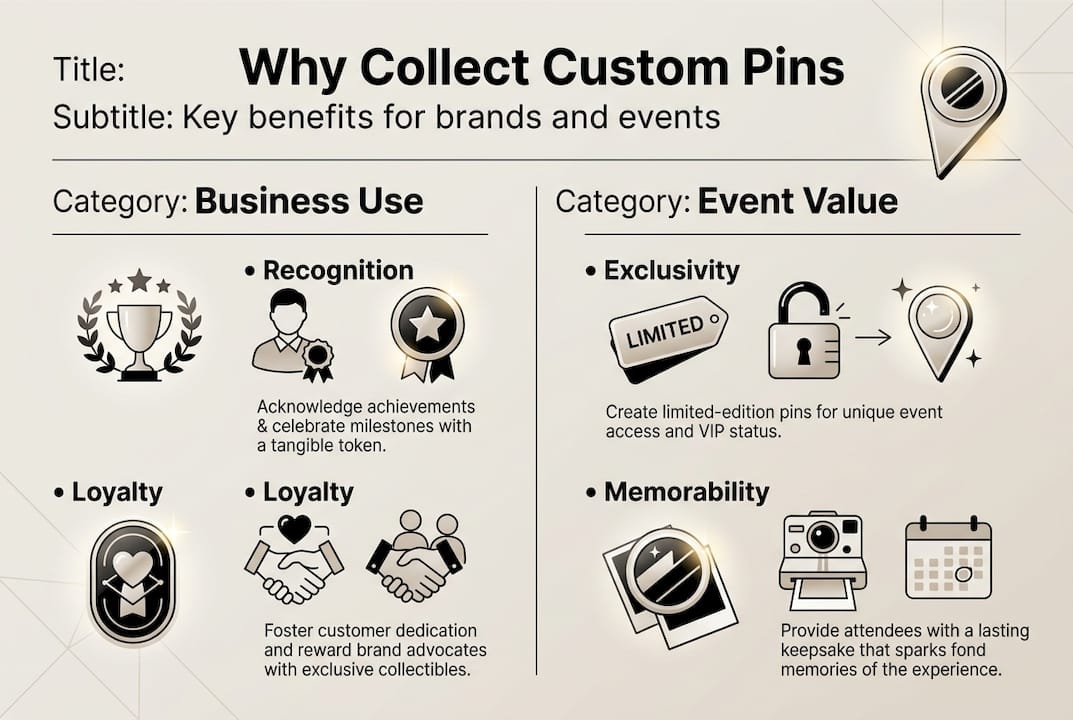
Soft enamel pins feature recessed enamel that sits below raised metal lines, creating textured surfaces with visible dimension. This traditional technique costs less and produces classic looks that work well for detailed designs with multiple colors. Hard enamel pins undergo additional polishing that brings enamel flush with metal lines, creating smooth surfaces with premium feel. The choice impacts both aesthetics and budget, with hard enamel typically costing 20-30% more but delivering more refined results.
Critical design constraints govern pin manufacturability regardless of enamel type. Metal lines separating colors must measure at least 0.3mm wide, or they’ll collapse during production. Color fills require minimum areas of 0.5mm to accept enamel properly. Gradients and photographic details don’t translate to enamel production, which uses solid color fills. Text smaller than 8-point becomes illegible at typical pin sizes of 1-1.5 inches.
| Design Mistake | Why It Fails | Solution |
|---|---|---|
| Gradient backgrounds | Enamel uses solid colors only | Use flat colors with clear boundaries |
| Thin line details | Lines under 0.3mm collapse | Simplify to bold, clear shapes |
| Too many colors | Increases cost and complexity | Limit to 4-6 colors maximum |
| Small text | Becomes illegible at pin scale | Use 8-point minimum, test at size |
| Photographic images | Cannot reproduce in enamel | Convert to simplified vector art |
Professional collaboration with experienced designers prevents these pitfalls while optimizing visual impact. Manufacturers who specialize in enamel pins understand production constraints intuitively and can guide design adjustments that preserve creative vision while ensuring manufacturability. Collaborate on pin design with experts who translate concepts into production-ready artwork.
Color selection requires strategic thinking beyond aesthetics. Standard Pantone colors reproduce reliably, while custom mixing adds cost and potential variation between production runs. Metallic finishes like gold, silver, copper, and black nickel create different moods and pair differently with enamel colors. Gold pairs warmly with reds and oranges, while silver complements blues and purples. These relationships impact overall design cohesion.
Pro Tip: Before finalizing designs, create full-size mockups at intended pin dimensions and view them from typical wearing distances of 3-5 feet. Details that look clear on screen often disappear at actual size, revealing necessary simplifications before production begins.
Backing options affect functionality across use cases. Rubber clutches work for general wear but loosen over time. Locking backs provide security for valuable pins but cost slightly more. Magnetic backs eliminate puncturing clothing but may not hold heavier pins securely. Selecting appropriate backs based on intended use prevents loss and user frustration.
Explore custom pins for your brand, event, or collection
Whether you’re building employee recognition programs, planning memorable events, or starting a personal collection, custom pins deliver lasting impact that justifies their modest investment. PinPerfect specializes in transforming concepts into high-quality enamel pins that serve your specific goals. Our design team understands production constraints and works collaboratively to ensure your vision translates perfectly from idea to finished product.
We offer both soft and hard enamel options with worldwide shipping, making professional custom pins accessible regardless of order size or location. Our customization platform guides you through design choices while our expert team remains available for consultation at every step. Thousands of businesses, event planners, and collectors trust PinPerfect to deliver pins that exceed expectations and create connections that last. Start designing your custom pins today and discover why quality matters in every detail.
FAQ
What types of enamel pins are best for beginners?
Soft enamel pins work perfectly for beginners due to lower production costs and classic textured appearance that showcases traditional craftsmanship. They feature recessed enamel between raised metal lines, creating dimensional surfaces that catch light beautifully. Hard enamel pins offer smooth, polished finishes that feel more premium but typically cost 20-30% more due to additional manufacturing steps. Start with soft enamel to understand the process, then explore hard enamel for special projects requiring refined aesthetics.
How do custom pins help with customer loyalty?
Pins serve as tangible brand reminders that customers display on bags, jackets, and accessories, keeping your business visible in their daily lives. Recipients are 84% more likely to purchase after receiving custom pins because physical tokens create emotional connections that digital marketing cannot replicate. When customers collect pins tied to purchases or milestones, they develop investment in completing sets that drives repeat business. This transforms transactional relationships into ongoing engagement where customers actively seek reasons to interact with your brand.
Can custom pins be used effectively for fundraisers?
Pins incentivize donations by offering memorable rewards that supporters proudly display, creating visible advocacy that spreads awareness organically. They increase engagement with fundraising campaigns by giving donors tangible proof of participation that sparks conversations and social sharing. Using custom pins for fundraising works especially well when designs reflect campaign themes and limited editions create urgency. Tiered pin designs for different donation levels encourage larger contributions while building collector culture around your cause.
What should I consider when designing a custom pin?
Work with designers familiar with enamel pin constraints who understand minimum line widths, color separation requirements, and scale limitations that affect manufacturability. Keep designs simple and bold with clear color boundaries, avoiding gradients and thin lines that don’t translate to production. Limit colors to 4-6 maximum to control costs while maintaining visual impact. Test designs at actual pin size from typical viewing distances to ensure details remain visible and text stays legible when worn.