

Explore the role of pins in culture and identity
Most people glance at pins and see nothing more than decorative trinkets. Yet these small accessories carry profound cultural weight, serving as miniature manifestations of heritage, belief systems, and personal narratives. From ancient civilizations fastening garments with symbolic brooches to modern collectors displaying their identities through enamel designs, pins have always been more than they appear. This article reveals how pins function as powerful tools for expressing who we are, where we come from, and what communities we belong to, while offering practical guidance for collectors and cultural enthusiasts.
Table of Contents
- Key takeaways
- The cultural origins and evolution of pins
- How pins express identity and heritage today
- Collecting and wearing pins: practical guide and cultural tips
- Comparing types of pins and their cultural impact
- Discover cultural pins and collectibles at PinPerfect
- Frequently asked questions
Key Takeaways
| Point | Details |
|---|---|
| Identity expression | Pins function as wearable declarations of identity, signaling personal beliefs, origins, and group affiliations. |
| Cultural heritage | From ancient brooches to modern enamel designs, pins connect wearers to history, tradition, and community through symbols. |
| Collecting heritage | Pin collecting links generations and diasporas, using patterns, flags, and folk motifs to maintain ties with ancestral homelands. |
| Symbol context research | When evaluating vintage pins, research the symbols’ historical contexts to uncover the true cultural value behind the design. |
The cultural origins and evolution of pins
Pins trace their ancestry to the earliest human civilizations, where they served essential functions far beyond ornamentation. Ancient Egyptians used decorative pins to fasten clothing while signaling social rank through precious materials and intricate designs. Celtic societies crafted elaborate brooches that communicated clan affiliation and status within tribal hierarchies. These weren’t fashion choices but identity declarations embedded in daily wear.
The transformation from utility to symbolism accelerated through medieval Europe, where pins became political statements. Knights wore heraldic badges to display loyalty to lords and kingdoms. Religious pilgrims collected pins from sacred sites as proof of their spiritual journeys. By the Renaissance, pins had cemented their role as portable declarations of allegiance, belief, and belonging. Enamel pins have evolved from mere decoration to powerful cultural symbols that boost engagement by 50% at events.
Today’s pins carry forward this legacy with remarkable diversity:
- National symbols that connect diaspora communities to homeland heritage
- Movement badges that unite activists around shared causes
- Commemorative designs marking cultural milestones and historical events
- Artistic expressions celebrating ethnic traditions and folk art
Pro Tip: When examining vintage or antique pins, research the historical context of their symbols. A pin’s true cultural value often lies in the story it tells about the era and community that created it.
“Pins are miniature canvases where culture, history, and personal narrative converge. Each design choice, from color palette to symbol selection, communicates layers of meaning that transcend language barriers.” This insight captures why collectors and cultural enthusiasts view pins as serious artifacts rather than casual accessories.
How pins express identity and heritage today
Contemporary pin culture has exploded into a sophisticated language of self-expression. Walk through any urban center and you’ll spot pins declaring everything from ethnic pride to political positions, each one a deliberate statement about the wearer’s identity. Enamel pins are key tools in cultural branding and personal expression, especially in Israel and globally, where they bridge traditional symbols with modern design sensibilities.

The power of pins lies in their visibility and permanence. Unlike temporary social media posts, a pin worn on a jacket or backpack makes a constant physical declaration. This tangible quality explains why movements from civil rights to environmental activism have embraced pins as organizing tools. They create instant visual recognition among supporters while sparking conversations with curious observers.
Cultural heritage finds particularly strong expression through pin collecting. Second and third generation immigrants often use pins featuring traditional patterns, national flags, or folk art motifs to maintain connections with ancestral homelands. These wearable artifacts become conversation starters that allow wearers to share family histories and cultural traditions with others.
Personal versus organizational identity through pins:
| Purpose | Design approach | Cultural impact |
|---|---|---|
| Personal expression | Individual symbols, eclectic mixing, emotional resonance | Creates authentic self-representation and invites dialogue |
| Organizational branding | Cohesive design language, consistent messaging, professional polish | Builds group identity and external recognition |
| Hybrid collections | Curated balance of personal and collective symbols | Demonstrates individual within community context |
Selecting meaningful pins requires intentional consideration:
- Identify core aspects of your heritage or values you want to express visibly
- Research authentic symbols and their proper cultural contexts to avoid appropriation
- Choose quality materials that honor the significance of what you’re representing
- Consider how different designs work together when building a collection
- Source from creators who understand and respect the cultural weight of their designs
Collaborating on enamel pins boosts brand impact and cultural connection, particularly when groups want to create unified symbols that represent shared identities. Organizations from cultural associations to advocacy groups use custom pins to strengthen member bonds and broadcast collective values.
Pro Tip: Start your collection with one or two deeply meaningful pieces rather than accumulating random designs. A focused collection tells a coherent story about your identity and creates more powerful visual impact when displayed together.
Collecting and wearing pins: practical guide and cultural tips
Building a culturally significant pin collection requires more than casual acquisition. Successful collectors approach their hobby with the mindset of curators, carefully selecting pieces that create meaningful narratives. The most compelling collections balance aesthetic appeal with authentic cultural representation, avoiding superficial trends in favor of designs with genuine heritage connections.
Starting your collection strategically:
- Define your collection’s theme around specific cultural interests, heritage connections, or value systems
- Set quality standards for materials and craftsmanship that reflect the importance of your theme
- Research reputable designers and manufacturers who demonstrate cultural sensitivity and expertise
- Begin with foundational pieces that anchor your collection’s narrative before expanding
- Document the story behind each pin to preserve context and meaning for future appreciation
Wearing pins appropriately demands cultural awareness. Religious symbols, military insignia, and ceremonial designs carry specific protocols about when and how they should be displayed. Before wearing culturally significant pins, research their traditional contexts and any restrictions on their use. This respect prevents unintentional offense and demonstrates genuine appreciation rather than superficial appropriation.
Placement matters both practically and symbolically. Lapels and jacket collars offer traditional visibility for formal contexts. Backpacks and casual wear allow more experimental arrangements that showcase personality. Some collectors create dedicated display boards or shadow boxes for pins too delicate or meaningful for regular wear, treating them as gallery pieces that preserve cultural artifacts.
Maintaining enamel pins ensures longevity:
- Store pins in individual compartments or on pin boards to prevent scratching
- Clean gently with soft cloths, avoiding harsh chemicals that damage enamel
- Keep collections away from extreme temperatures and humidity
- Use rubber pin backs rather than butterfly clasps for better security
- Rotate displayed pins periodically to prevent prolonged sun exposure
Pro Tip: Photograph your collection regularly with notes about acquisition dates and sources. This documentation becomes invaluable for insurance purposes and helps you track the evolution of your collecting journey over time.
Bulk enamel pin orders allow collectors and organizations to maximize impact and cultural reach, particularly when creating custom designs for events, fundraisers, or group initiatives. Working with experienced manufacturers ensures your cultural symbols translate accurately into wearable form while maintaining production quality across larger quantities.
Comparing types of pins and their cultural impact
Pin varieties carry distinct aesthetic qualities and cultural associations that influence how effectively they communicate intended messages. Understanding these differences helps you select formats that amplify rather than dilute your cultural statements. Material choices, production methods, and design possibilities all contribute to a pin’s ability to resonate with specific audiences and contexts.
Enamel pins dominate contemporary collecting for good reason. Their smooth surfaces and vibrant colors reproduce intricate cultural symbols with remarkable clarity. Hard enamel creates museum-quality finishes perfect for preserving traditional designs, while soft enamel offers texture and dimension that adds visual interest. Both techniques support the detailed work necessary for authentic cultural representation.
Magnetic pins provide practical advantages for delicate fabrics and rotating displays. Collectors who frequently change their pin arrangements appreciate the convenience of magnetic backs. However, their modern functionality sometimes clashes with traditional aesthetics, making them less suitable for ceremonial or heritage-focused applications where classic presentation matters.
Button pins offer affordability and ease of customization, making them popular for grassroots movements and event distribution. Their paper or plastic construction limits durability compared to metal alternatives. Yet this accessibility has made button pins powerful tools for spreading cultural messages quickly and widely, particularly in activist contexts where volume matters more than permanence.
Embroidered pins bring textile traditions into wearable form, connecting contemporary pin culture with ancient fabric arts. Their soft construction and thread work evoke folk art traditions, making them particularly effective for expressing cultural heritage rooted in textile crafts. The tactile quality creates intimate connections that hard surfaces cannot replicate.
| Pin type | Cultural strengths | Limitations | Best uses |
|---|---|---|---|
| Hard enamel | Premium finish, archival quality, precise detail | Higher cost, longer production | Heritage symbols, commemorative pieces, formal contexts |
| Soft enamel | Textured appeal, vibrant colors, good detail | Less durable than hard enamel | Casual wear, artistic expression, moderate budgets |
| Magnetic | Fabric-safe, easy rotation, modern convenience | Less traditional feel | Delicate garments, frequent changes, contemporary designs |
| Button | Extremely affordable, fast production, mass distribution | Limited durability, basic appearance | Movement organizing, event giveaways, temporary campaigns |
| Embroidered | Textile tradition connection, soft aesthetic, unique texture | Less weather-resistant | Folk art themes, textile heritage, artistic collections |
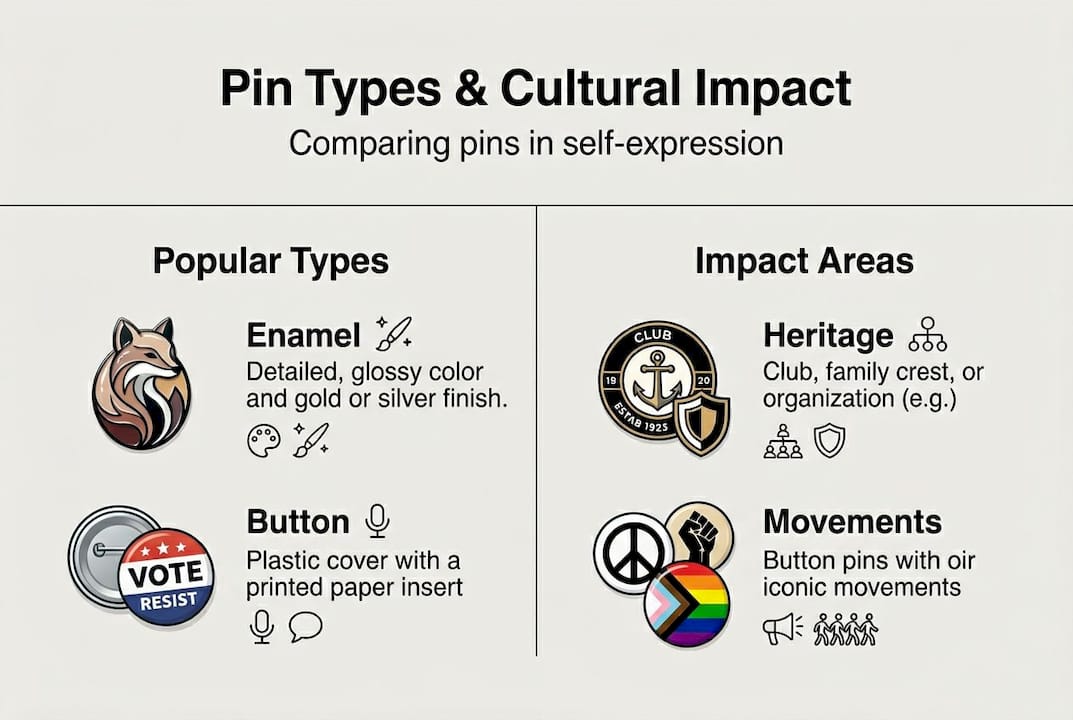
Design choices within each format further influence cultural impact. Color palettes that reference traditional dyes or national flags strengthen heritage connections. Symbol selection requires careful research to ensure authentic representation rather than stereotyped imagery. Scale and proportion affect visibility and wearability, with larger statement pieces serving different purposes than subtle daily wear options.
Various pin types convey different cultural messages and have unique aesthetics that align with specific collecting goals and identity expressions. Staying current with evolving design trends while honoring traditional symbolism creates pins that feel both timeless and contemporary.
Pro Tip: Mix pin types strategically within your collection to create visual variety while maintaining thematic coherence. A combination of enamel statement pieces with smaller embroidered or button pins adds depth and interest to your overall presentation.
Discover cultural pins and collectibles at PinPerfect
Now that you understand how pins communicate cultural identity and heritage, you’re ready to explore designs that resonate with your personal story. PinPerfect specializes in creating meaningful accessories that honor cultural traditions while embracing contemporary aesthetics. Our collections feature everything from iconic national symbols to custom designs that bring your unique vision to life.

Explore our most loved pin designs to discover what resonates with collectors and cultural enthusiasts worldwide. The Israeli flag enamel pin exemplifies how traditional symbols translate into wearable art that connects diaspora communities with homeland heritage. Whether you’re building a personal collection or creating custom pins for your organization, the PinPerfect store offers quality craftsmanship and cultural sensitivity in every design.
Frequently asked questions
What is the significance of pins in different cultures?
Pins have served as symbols of status, allegiance, and identity across civilizations for thousands of years. Ancient societies used decorative pins to indicate social rank and tribal affiliation. Modern cultures continue this tradition, with pins representing everything from national pride to religious devotion, each design reflecting local traditions and values specific to its community of origin.
How can I start a personal collection of culturally meaningful pins?
Begin by identifying cultural themes that connect to your heritage, values, or interests. Research authentic symbols and their proper contexts to ensure respectful representation. Source pins from reputable creators who demonstrate cultural knowledge and craftsmanship. Consider bulk enamel pin orders if you’re creating custom designs for groups or want to ensure consistent quality across multiple pieces.
Can pins be used for events to enhance cultural engagement?
Pins create powerful cultural symbols at gatherings, transforming abstract themes into tangible keepsakes that attendees treasure long after events conclude. Pins boost engagement and recall by 50% at events featuring cultural themes, making them invaluable tools for organizers. They facilitate networking by providing visible conversation starters and strengthen community bonds through shared symbols.
What materials work best for culturally significant pins?
Hard enamel offers the most durable and premium finish, making it ideal for heritage symbols and commemorative pieces meant to last generations. Soft enamel provides excellent color vibrancy and detail at moderate price points. The choice depends on your budget, intended use, and the cultural weight of the design. More significant symbols often warrant higher-quality materials that honor their importance.
How do I wear pins respectfully in cultural contexts?
Research the traditional meanings and protocols associated with specific cultural symbols before wearing them. Some religious or ceremonial pins have restrictions on who can wear them or appropriate contexts for display. When in doubt, ask members of the culture the pin represents. Respectful wearing demonstrates genuine appreciation and understanding rather than superficial appropriation of cultural elements.
Recommended
- Museum branding pins boost visitor engagement 50% – PinPerfect
- How to create cultural pins in Israel: 35% boost in engagement – PinPerfect
- Role of Pins in Events: 50% Boost in Engagement & Recall – PinPerfect
- Top cultural symbol enamel pins to celebrate Israeli heritage – PinPerfect
Découvrez un modèle qui réunit deux communautés : Pin’s émaillé drapeaux Ukraine–Israël.