

Gift shop merchandising: drive sales with proven strategies
TL;DR:
- Effective gift shop merchandising leverages shopper psychology to significantly increase sales.
- Using strategic placement, grouping, and visual storytelling guides customers toward more purchases.
- Regular testing, data analysis, and seasonal planning are key to maximizing merchandise performance.
Gift shop merchandising: drive sales with proven strategies
Many gift shop owners believe that a beautiful, well-decorated store is enough to move products off the shelves. It isn’t. There is a measurable gap between stores that look nice and stores that are strategically merchandised, and that gap shows up directly in your revenue. Appealing displays increase sales up to 540%, but only when those displays are built around shopper psychology, not just aesthetics. This guide walks you through every layer of effective gift shop merchandising, from core principles and display design to pricing strategy, operational challenges, and the mindset shifts that separate average retailers from high-performing ones.
Table of Contents
- Defining gift shop merchandising: Core principles
- Designing displays: Strategies that drive sales
- Pricing, product mix, and space: Advanced merchandising tactics
- Common challenges and proven solutions in merchandising
- The truth most experts miss about gift shop merchandising
- Enhance your gift shop with unique merchandise solutions
- Frequently asked questions
Key Takeaways
| Point | Details |
|---|---|
| Strategic display drives sales | Evidence-driven merchandising can increase gift shop sales dramatically, far beyond decorative displays alone. |
| Group by story, not just price | Arranging items around customer needs, stories, or uses outperforms simple price or category grouping. |
| Avoid overcrowding | Keeping aisles and displays clear with negative space boosts engagement and prevents lost sales. |
| Experiment and adapt | Refreshing displays regularly and testing tactics leads to better results and sustained shopper interest. |
Defining gift shop merchandising: Core principles
Gift shop merchandising is the deliberate practice of arranging, presenting, and curating products in a way that guides customers toward purchases. It goes far beyond decoration. Where interior design focuses on how a space feels, merchandising focuses on how a space performs. Every shelf, table, and wall display is a conversion opportunity, and your job is to design each one with intent.
At its core, effective merchandising involves several interconnected tasks:
- Floor planning: Mapping traffic flow so shoppers naturally move through all major product zones
- Product arrangement: Positioning items by category, story, or use case so browsing feels effortless
- Display storytelling: Creating visual narratives that help customers imagine owning or gifting the product
- Shoppability: Ensuring every item is within easy reach, clearly priced, and simple to pick up
- Visual hierarchy: Using height, color, and light to direct the eye toward focal points and featured items
One of the most overlooked elements is negative space. Cluttered shelves signal chaos, not abundance. Shoppers presented with too many options at once tend to disengage. Strategic gaps between product groupings give the eye room to rest and make individual items appear more valuable.
Understanding promotional merchandise fundamentals is a strong foundation before you redesign any display, because it frames how products carry meaning beyond their price tag.
According to expert guidance on retail floor management, systematic floor planning, risers for visual stories, and negative space are the anatomy of a high-performing gift shop layout. Risers and tiered displays add vertical interest, which draws the eye upward and makes the full assortment visible from across the room. Systematic methods prevent the common pitfall of reactive, scattered displays that confuse shoppers rather than guide them.
Key insight: Merchandising is not an art project. It is an operational discipline with measurable outcomes. Treat every display decision as a hypothesis you can test and refine.
Think of your shop floor as a conversation with each customer. The path they walk, the products they see first, and the stories each display tells all shape whether they leave with one item or five. When these elements align with shopper psychology, the result is not just better aesthetics. It is meaningfully higher conversion.
Designing displays: Strategies that drive sales
With the fundamentals defined, it’s time to explore the strategies that turn a display into a sales engine. The difference between a display that converts and one that gets walked past is rarely about budget. It is about placement, grouping, and intentional design.
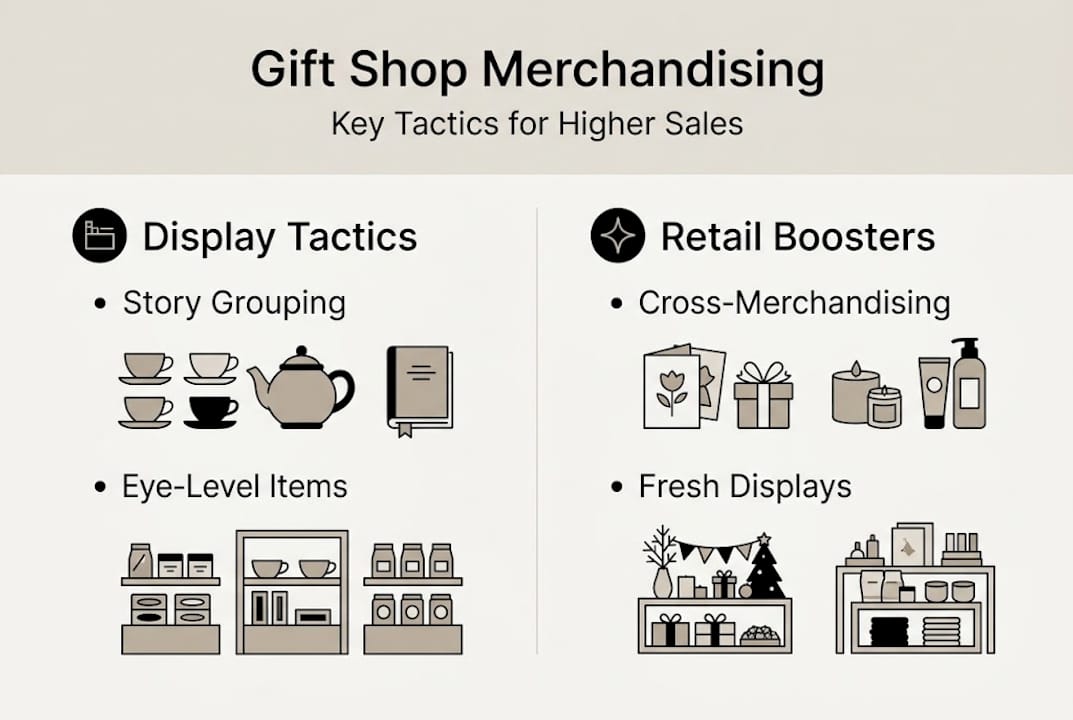
Research on visual merchandising tactics reveals three powerful statistics every gift shop manager should know: appealing displays can increase sales up to 540%, eye-level placement boosts sales by 35 to 60%, and cross-merchandising raises add-on sales rates by 28 to 52%. These numbers represent real revenue waiting to be captured with smarter display choices.
Grouping by story or use case is one of the highest-impact tactics available. Instead of organizing products by type, organize them by occasion or recipient. A “new baby” vignette might include a custom pin, a small card, and a keepsake magnet, all grouped together. A shopper who came in for one item suddenly sees a complete gift solution. This approach increases basket size without requiring any additional selling.
Eye-level placement is non-negotiable for your highest-margin items. The zone between 3.5 and 5 feet from the floor is the sweet spot for adult shoppers. Place your best-sellers and premium products here, and reserve lower shelves for budget items or bulk categories.
Here is a quick breakdown of display zones and their best uses:
| Display zone | Height from floor | Best use |
|---|---|---|
| Power zone | 3.5 to 5 feet | High-margin, best-selling items |
| Stretch zone | 5 to 6.5 feet | Visual interest, brand signage |
| Stoop zone | Below 3.5 feet | Bulk items, lower-price products |
| Floor level | Ground | Stock overflow, heavy items |
Cross-merchandising is the practice of pairing complementary products in the same display. A custom enamel pin displayed alongside a small gift box and a greeting card creates a complete gifting moment. The customer sees the solution, not just individual products. Explore merchandising types for sales to see how this works across different retail contexts.
Pro Tip: Refresh your high-traffic displays at least once a month. Regular shoppers notice stale arrangements and stop engaging with them. Even small changes, like rotating which item leads the grouping or swapping the color story, signal freshness and reward repeat visits.
Lighting and motion add another layer of engagement. Warm spotlights on a featured display draw attention more effectively than overhead fluorescents alone. Small rotating fixtures or hanging elements create subtle motion that catches peripheral vision. Bold signage with clear value statements, such as “Perfect for gifting” or “Made locally,” reduces the cognitive load on shoppers and shortens the path to purchase.
Pricing, product mix, and space: Advanced merchandising tactics
To get the most from your space, it’s vital to think beyond display and consider assortment, pricing, and shopper flow together as one system. Even a perfectly styled display underperforms if the price architecture or product mix is wrong.
Tiered pricing is one of the most proven tools in retail. Structuring your assortment across three price bands gives every shopper a path to purchase, regardless of budget:
- Budget tier: Affordable impulse items priced for easy, no-hesitation decisions (small pins, magnets, stickers)
- Mid tier: Core gifting products at a considered but accessible price point (custom keychains, themed sets)
- Premium tier: Specialty or collector items with distinctive design and perceived exclusivity
Research confirms that tiered pricing displays and balancing high-turn essentials with premium items enhance margins, while overcrowding consistently reduces sales. When premium items are placed alongside budget products without clear visual separation, the premium items lose perceived value. The physical space between price tiers signals the quality difference.
Curating your product mix requires ongoing attention. A strong assortment balances high-turn essentials, those everyday items customers reliably purchase, with specialty products that create excitement and discovery. A gift shop that only stocks basics feels like a convenience store. One that only stocks novelties feels hard to shop. The right blend gives customers something familiar to anchor on while surprising them with something new.
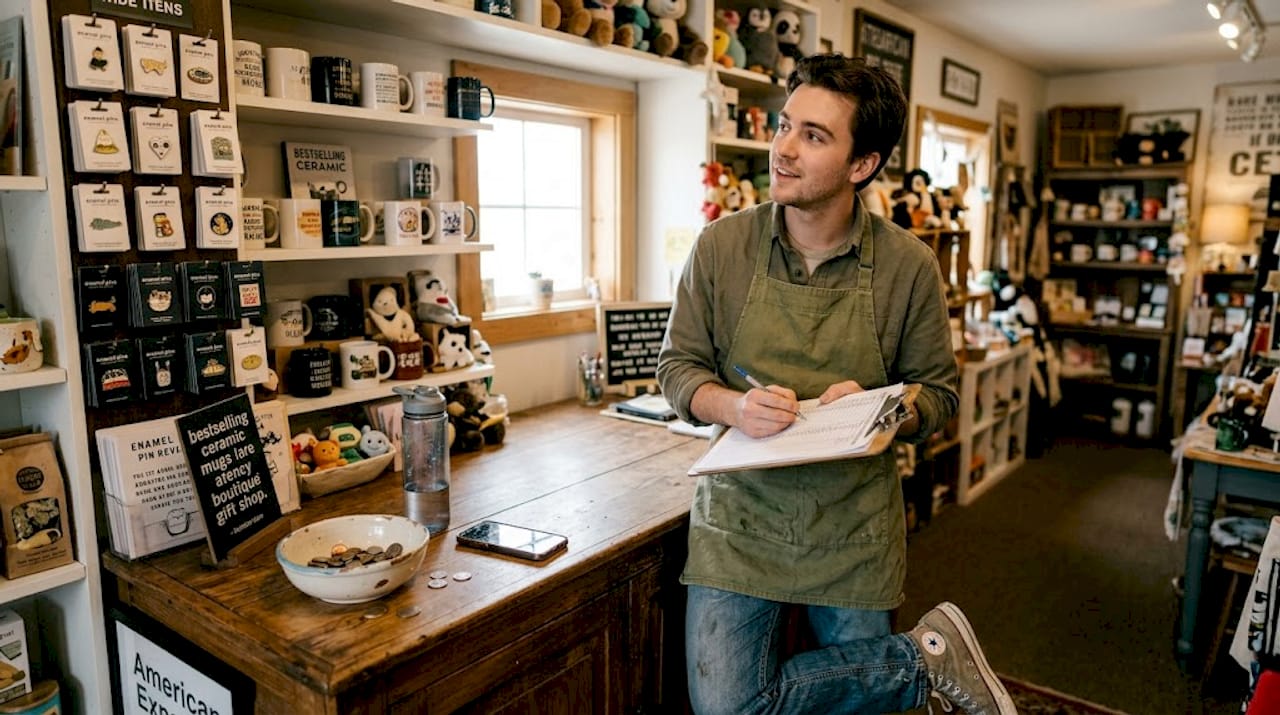
Pro Tip: Review your sell-through rate by category every 60 days. Products that sit for more than two full months without strong movement are consuming space that could be generating revenue. Replace slow movers with seasonal or limited items to keep your mix active.
For personalized merchandise that appeals across price tiers, exploring personalized corporate gifts reveals how customization adds perceived value without necessarily increasing cost.
Seasonality planning is where many gift shops lose revenue before the season even starts. The most effective operators begin planning 90 to 120 days ahead of major holidays and events. That window allows time for product sourcing, display design, and team training. Reacting to a season after it arrives means missed margins and rushed choices.
Omnichannel strategies are increasingly relevant even for physical gift shops. When your in-store display strategy aligns with your online product photography and social media visuals, customers experience a consistent brand story. That consistency builds trust, which translates to both foot traffic and online add-on sales.
Common challenges and proven solutions in merchandising
With tactics explained, it’s important to recognize the real-world challenges and how to overcome them. Merchandising strategy looks clean on paper but gets complicated in the day-to-day operation of a retail environment.
One of the most persistent debates is planograms versus creative freedom. A planogram is a detailed diagram showing exactly where each product should be placed, using data on sales performance and shopper flow. Creative freedom allows merchandisers to respond to trends, inventory changes, and seasonal moments with flexibility. Neither approach is universally better.
Key challenges and their practical solutions:
- Display staleness: Rotate displays weekly or monthly using a scheduled calendar. Assign one team member as the “display lead” for accountability
- Labor constraints: Batch display changes together rather than doing them reactively. Pre-stage new displays in back stock before the changeover
- Team inconsistency: Train staff on brand standards using photo references of ideal displays, so everyone has a shared visual target
- Overcrowding creep: Set a rule that every new product added to a display requires removing one existing item
- Signage gaps: Audit signage monthly. Missing or outdated price signs erode customer confidence and slow purchase decisions
According to research on retail merchandising strategy, frequent display rotation prevents staleness but requires operational discipline, and the planogram versus creative freedom debate is central to how retailers maintain freshness without sacrificing consistency.
The rule-breaking principle: Experienced merchandisers know that rigid adherence to any system eventually becomes its own problem. The best operators build in deliberate moments of creative disruption, perhaps one display per month that breaks the formula, to test shopper response and keep the space feeling alive.
Building unique brand impact into your displays is what transforms a functional shop into one that customers remember and return to. Merchandise that tells a story, celebrates a cause, or reflects cultural identity gives shoppers a reason to buy that goes beyond price or convenience. Pairing that strategy with donor engagement with merchandise thinking shows how emotional resonance drives purchase decisions across retail contexts.
Getting team buy-in is often the hardest part. Merchandising is only as good as the consistency with which it is maintained. Regular team briefings, visual training aids, and celebrating wins when a refreshed display outperforms the previous one all build a culture where merchandising is treated as a shared priority, not just a manager’s task.
The truth most experts miss about gift shop merchandising
Having explored strategies and challenges, let’s step back for an honest look at what sets successful merchandisers apart. Most retail advice focuses on aesthetics: color blocking, display props, seasonal themes. These elements matter, but they are not what drives lasting performance.
What actually separates high-performing gift shops from the rest is a willingness to measure first, design second. Too many retailers arrange displays based on what feels right visually and never test whether those choices are actually moving product. The stores that consistently outperform their competition are the ones tracking which displays generate the most stops, touches, and conversions, then using that data to make their next design decision.
Shopper behavior rarely matches retailer intuition. An item you love may not be what your customer responds to. The solution is structured experimentation: make one change at a time, give it two to three weeks, then measure the result. This method, sometimes called A/B merchandising, transforms guesswork into learning.
Customer feedback is another underused resource. Asking regular shoppers what they noticed, what they couldn’t find, or what felt cluttered gives you intelligence no planogram software can replicate. At PinPerfect, we believe that reviews and customer trust shape not just product choices but the entire shopping experience. That same principle applies in physical retail. Consumer-first design, solving for actual shopper needs rather than manager preferences, creates the biggest measurable uplift.
Enhance your gift shop with unique merchandise solutions
If you’re ready to apply these tactics, here’s how our solutions can help your shop stand out. The right product anchors a great display, and unique, story-driven merchandise gives shoppers a reason to stop, engage, and buy.
At PinPerfect, we specialize in custom enamel pins, magnets, and keychains that carry real meaning, whether that’s cultural identity, cause advocacy, or corporate pride. Our Israeli Flag Enamel Pin is a strong example of how a single, well-designed item can anchor a complete gift display and drive consistent add-on sales. For shops building out a broader themed assortment, the IDF Enamel Pin Collection offers a curated range that tells a cohesive story on your shelf. Contact us to explore wholesale options and custom design collaboration.
Frequently asked questions
What makes merchandising in gift shops different from general retail?
Gift shop merchandising relies heavily on storytelling, cross-merchandising, and curated presentation to enhance perceived value and encourage gift-giving purchases. Grouping by lifestyle or story and cross-merchandising complementary items consistently generates higher sales than standard category-based layouts.
How often should gift shop displays be refreshed?
Displays should be refreshed at least every season, and ideally every week or month to maintain shopper interest and prevent staleness. Research on display refresh frequency confirms that regular updates sustain customer engagement and improve conversion rates.
Does display overcrowding hurt sales?
Yes, overcrowding displays or aisles reduces sales, especially for cart users, so using negative space is essential for better results. Overcrowding and aisle crowding are consistently linked to reduced purchase rates in retail environments.
What is cross-merchandising and why is it important?
Cross-merchandising means presenting complementary items together to create a complete gifting solution for the shopper. This strategy can increase add-on sales rates by 28 to 52%, making it one of the highest-return tactics available.
How can gift shop owners plan for merchandising around seasonality?
Seasonality planning should begin 90 to 120 days ahead, allowing time for thoughtful product selection and themed display setup. Starting early means you can plan seasonal assortments without the rushed decisions that compress margins and lead to inventory mismatches.