

Why use personalized accessories: meaning, identity, brand
Personalized accessories are far more than decorative touches. They carry identity, spark emotion, and drive real business results. Whether you’re an individual celebrating your heritage or a company building brand loyalty, the right customized piece can transform how people see you and how they see themselves. Psychological needs like self-expression and group belonging sit at the heart of why personalization resonates so deeply. This guide walks you through the psychology, cultural weight, business impact, and practical steps behind choosing personalized accessories that truly matter.
Table of Contents
- The psychology and meaning behind personalization
- Cultural, emotional, and branding significance
- Business impact: ROI and market trends for personalization
- How personalization works: Methods and mechanics
- Risks, considerations, and common pitfalls
- When and how to choose personalized accessories
- Discover unique personalized accessories at PinPerfect
- Frequently asked questions
Key Takeaways
| Point | Details |
|---|---|
| Personal touch matters | Personalized accessories serve deep psychological needs and strengthen emotional bonds. |
| Business benefits are real | Data proves personalized items can lift revenue, boost loyalty, and cut costs. |
| Choose with intention | Successful personalization matches culture, occasion, and recipient—avoid generic or mismatched choices. |
| Operational pitfalls exist | Brands must consider costs, possible counterfeits, and scalability when opting for personalization. |
| Application is broad | Individuals and businesses use customized accessories for identity, celebration, and branding across contexts. |
The psychology and meaning behind personalization
Humans are wired to want things that feel uniquely theirs. When you personalize an accessory, you’re not just adding a name or a logo. You’re signaling who you are, what you value, and where you belong. That signal carries real emotional weight.
Research confirms that personalized accessories fulfill psychological needs for self-expression, identity, emotional attachment, exclusivity, and group affiliation. These aren’t superficial desires. They’re core human motivations that drive purchasing decisions every day.
Gift-giving adds another layer. When you customize a gift, the recipient doesn’t just appreciate the object. Studies show that recipients feel vicarious pride and increased self-esteem from personalized gifts, because they sense the effort and intention behind the choice. That feeling is powerful and lasting.
Here’s what personalization delivers on a psychological level:
- A sense of uniqueness: Owning something made specifically for you feels rare and special.
- Stronger emotional bonds: Customized items connect giver and receiver in a way generic products simply can’t.
- Group identity: Matching accessories for a team, family, or cause create solidarity and belonging.
- Perceived value: Personalized items feel more premium, even when the base cost is similar.
“Personalization transforms an ordinary object into a story. It says: this was made with you in mind.”
Understanding the benefits of personalized merchandise helps both individuals and brands make smarter, more intentional choices about what they create and give.
Cultural, emotional, and branding significance
Personalized accessories take on even greater meaning when they reflect cultural identity. An engraved family crest, a pin featuring a national symbol, or a keychain shaped like a meaningful landmark all tell a story that goes beyond aesthetics. They celebrate heritage and create a sense of pride that generic accessories simply cannot replicate.
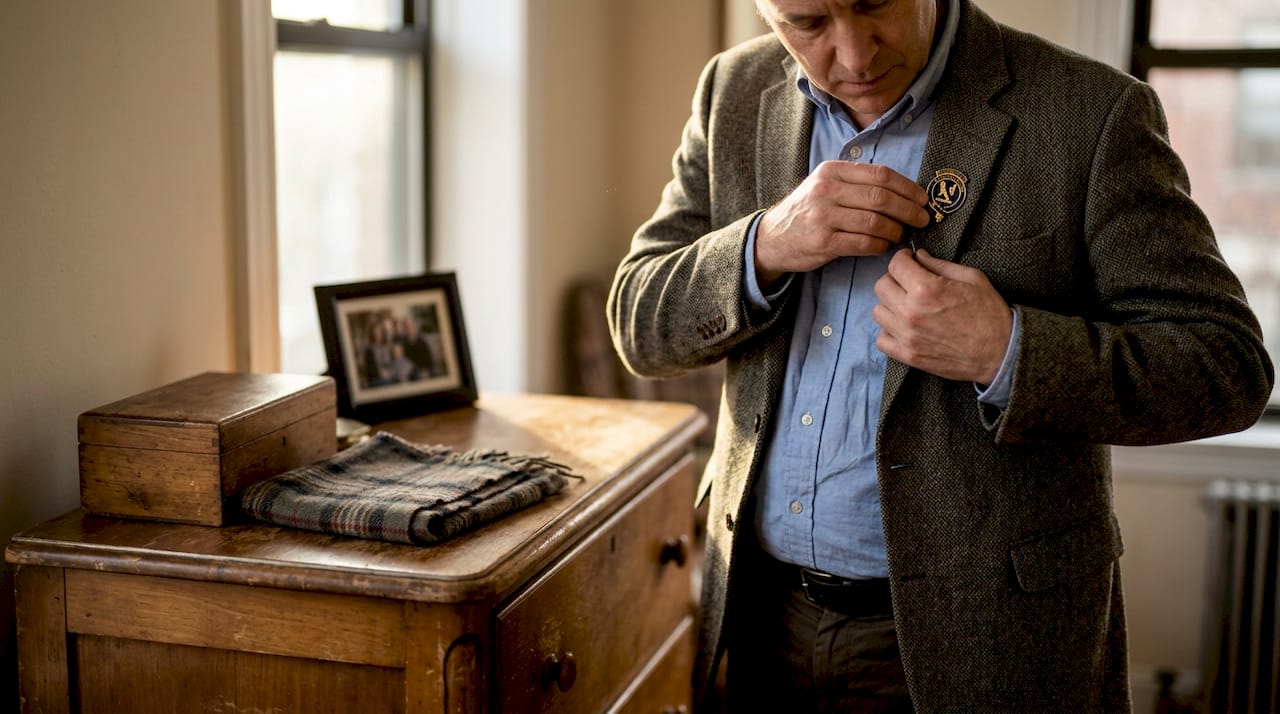
On important occasions, personalization becomes an emotional bridge. Weddings, graduations, corporate milestones, and cultural celebrations all call for something that feels intentional. Personalization is especially meaningful on formal occasions and when it matches the recipient’s culture or personal significance.
For brands, the stakes are equally high. A well-designed custom accessory can:
- Differentiate your brand in a crowded market where generic swag is forgettable.
- Build customer loyalty by making clients feel seen and valued.
- Reinforce brand values through design choices that reflect your mission and identity.
- Create shareable moments when recipients proudly wear or display your branded piece.
Pro Tip: Before designing a branded accessory, ask yourself what story you want it to tell. The most effective pieces communicate a value or emotion, not just a logo.
Exploring the benefits of custom pins reveals how even small accessories can carry enormous cultural and branding weight. And if you’re thinking about keychains specifically, solid personalized keychain design tips can help you create something recipients will actually use and remember.
“When an accessory reflects your culture or your cause, wearing it becomes an act of advocacy.”
Business impact: ROI and market trends for personalization
The business case for personalized accessories is strong and growing. The US personalized gifts market is projected to reach $158 billion by 2030, driven by rising consumer demand for customization across every product category. That’s not a niche trend. That’s a market shift.
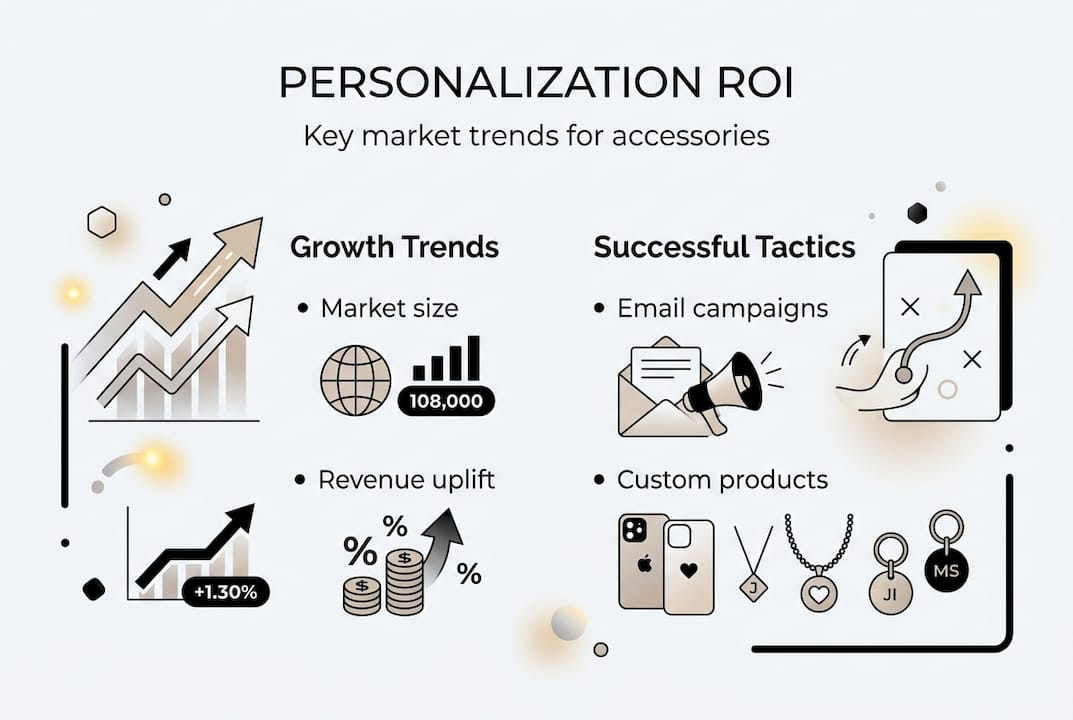
Companies that invest in personalization see measurable returns. Case studies show dramatic revenue lifts from personalized campaigns, including a 35.7% revenue lift for Torani, a 30% increase in average revenue per user for Perfect Jean, and 30x returns from personalized email campaigns. These numbers reflect a broader truth: people respond to things made for them.
| Strategy | Reported impact |
|---|---|
| Personalized email campaigns | Up to 30x revenue return |
| Custom product lines | 35.7% revenue lift (Torani) |
| Personalized accessories for retention | 30% ARPU increase (Perfect Jean) |
| Embroidery automation | Significant cost savings |
Pro Tip: If you’re launching a branded accessory campaign, start with a small batch to test design resonance before scaling. This limits risk and gives you real feedback fast.
For businesses ready to act, ordering custom pins globally is now more accessible than ever. Whether you’re building a loyalty program or preparing for a corporate event, custom keychains for branding offer a tangible, cost-effective touchpoint. And if you want a clear process from concept to delivery, a step-by-step custom pin branding guide can make the whole journey straightforward.
How personalization works: Methods and mechanics
Knowing why personalization matters is one thing. Knowing how it works gives you the tools to execute it well. Several techniques are widely used across the accessories industry, each with its own strengths.
Customization techniques like engraving, monogramming, and incorporating birthstones increase perceived effort and create a unique ownership experience. The method you choose shapes how the final piece feels and how much it resonates.
Common personalization methods compared:
| Method | Best for | Key advantage |
|---|---|---|
| Engraving | Metal accessories, keychains | Durable, premium feel |
| Color customization | Enamel pins, magnets | High visual impact |
| Monogramming | Fabric items, bags | Classic, personal touch |
| Embroidery | Apparel, patches | Textured, tactile quality |
| Die-casting | Custom pins, medallions | Precise, detailed designs |
Here’s a simple process for going from idea to finished personalized accessory:
- Define your purpose. Are you celebrating an occasion, building a brand, or honoring a culture? Your goal shapes every design decision.
- Choose your method. Match the technique to the material and the message you want to send.
- Develop your design. Work with a designer or use a platform that offers collaborative design tools.
- Select materials and finishes. Soft enamel, hard enamel, gold plating, and matte finishes all create different impressions.
- Review a sample. Always approve a physical or digital proof before full production.
- Distribute with intention. Packaging, presentation, and timing all amplify the impact of a personalized piece.
For a deeper look at the creative process, the guide to creating custom pins walks through each stage clearly. If you’re working with magnetic options, the magnetic pin customization workflow covers the specifics you need.
Risks, considerations, and common pitfalls
Personalization is powerful, but it’s not foolproof. Getting it wrong can damage relationships, dilute brand value, or create cultural offense. Knowing the risks helps you avoid them.
Personalization works best in non-anxious relationships and may have negative effects if poorly executed or culturally insensitive. A gift that misreads the recipient’s identity or values can feel presumptuous rather than thoughtful.
Watch out for these common pitfalls:
- Style mismatches: A design that reflects your taste rather than the recipient’s can miss the mark entirely.
- Cultural insensitivity: Using symbols, colors, or imagery without understanding their cultural meaning can cause real harm.
- Over-personalization: Packing too many elements into one piece creates visual noise and dilutes the message.
- Scalability challenges: Custom production takes more time and coordination than off-the-shelf orders, especially at volume.
- Counterfeit risk: High complexity and counterfeit risks can dilute the premium perception of personalized accessories if quality control slips.
Pro Tip: Research the cultural context of any symbol or design element before using it in a personalized piece. What feels celebratory in one culture may carry a very different meaning in another.
Staying current with enamel pin trends helps you design pieces that feel relevant without accidentally borrowing from cultural contexts you haven’t fully understood.
When and how to choose personalized accessories
Not every situation calls for a personalized accessory. Knowing when to choose custom over off-the-shelf is part of making the right decision.
Personalized accessories are most impactful on significant occasions and for groups with strong shared identity. Think corporate anniversaries, cultural celebrations, team milestones, or meaningful personal gifts.
Here’s a practical decision-making process:
- Identify the occasion. Is this a milestone, a cultural event, or an everyday touchpoint? Higher significance calls for deeper personalization.
- Know your recipient. Understand their identity, values, and aesthetic preferences before designing anything.
- Check cultural alignment. Make sure your design choices respect and reflect the recipient’s background.
- Align with your brand. For businesses, every custom piece should reinforce your visual identity and core message.
- Set a realistic budget. Personalization adds value, but it also adds cost. Plan accordingly and prioritize quality over quantity.
- Choose a reliable partner. Work with a manufacturer who understands your vision and has a track record of quality craftsmanship.
Pro Tip: For corporate gifting, personalized accessories work best when they feel exclusive rather than mass-produced. Even small details like individual packaging or a handwritten note can elevate the experience significantly.
For individuals, the same principles apply. A personalized pin or keychain given at the right moment, with the right design, becomes something the recipient keeps for years. That’s the kind of impact that generic gifts rarely achieve.
Discover unique personalized accessories at PinPerfect
Everything you’ve read here points to one clear truth: personalization works when it’s done with intention, craft, and cultural awareness. At PinPerfect, we’ve built our entire platform around that belief.
Whether you’re an individual looking to celebrate your heritage, a business building a branded merchandise line, or an event organizer searching for meaningful keepsakes, the PinPerfect personalized accessory store has the tools, the team, and the craftsmanship to bring your vision to life. We offer custom enamel pins, keychains, magnets, and more, with worldwide shipping and a collaborative design process that puts your story at the center. Start with an idea. We’ll help you turn it into something people will wear with pride.
Frequently asked questions
Why are personalized accessories so popular right now?
Psychological needs for self-expression and belonging drive demand, and advances in manufacturing technology have made custom accessories more affordable and accessible than ever before.
Are personalized gifts really more meaningful than generic ones?
Yes. Recipients experience greater appreciation and increased self-esteem with personalized gifts because the customization signals genuine effort and thoughtfulness from the giver.
Is there a downside to using personalized accessories for branding?
Operational complexity and counterfeits can challenge personalized accessory branding, adding production costs and potentially diluting the premium perception your brand is trying to build.
What occasions are best for personalized accessories?
Milestones, cultural celebrations, and corporate gifting moments are ideal, since personalization is especially powerful on formal or significant occasions where the recipient’s identity and values are front and center.