

Enamel vs acrylic pins: choosing the best fit
Enamel pins resist scratches 50% better than acrylic, yet many buyers still assume both types perform equally. Choosing between enamel and acrylic pins affects durability, appearance, production time, and cost. Understanding their distinct characteristics helps you select the right pin type for promotional campaigns, corporate branding, or personal collections. This guide clarifies key differences and decision factors so you can confidently match pins to your needs.
Table of Contents
- Introduction To Enamel And Acrylic Pins
- Material And Production Processes
- Durability And Maintenance
- Design Aesthetics And Customization Options
- Production Time And Cost Comparison
- Use Cases: Which Pin Type Fits Your Needs?
- Common Misconceptions About Enamel And Acrylic Pins
- Explore Premium Pins At PinPerfect
- Frequently Asked Questions
Key takeaways
| Point | Details |
|---|---|
| Enamel pins are metal-based with baked enamel | They offer strong durability and premium feel ideal for corporate branding. |
| Acrylic pins use digitally printed plastic | They enable vibrant color and faster production for quick-turnaround projects. |
| Enamel pins cost more and require longer production times | Acrylic pins deliver budget-friendly solutions with 30-40% lower unit costs. |
| Choose enamel for lasting corporate branding | Acrylic suits quick, colorful event merchandise and pop culture collectibles. |
| High-grade acrylic pins can be durable indoors | They retain color and resist cracking for years, challenging common myths. |
Introduction to enamel and acrylic pins
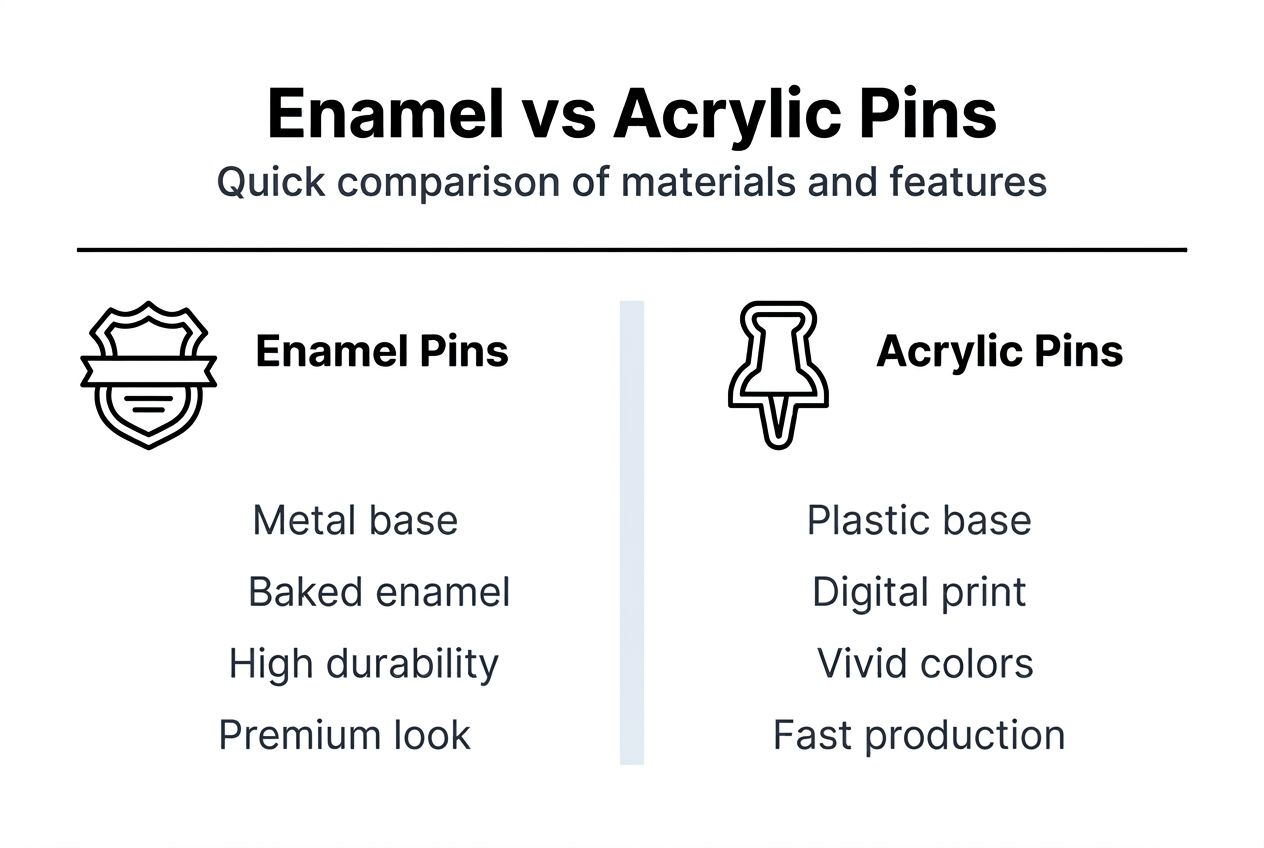
Enamel pins feature a metal base with colored enamel baked at high temperatures to create a hard, durable finish. The enamel fills recessed areas stamped into the metal, producing clean color sections with visible metal borders. Hard enamel pins undergo polishing after baking, creating a smooth surface flush with the metal edges. Soft enamel pins have slightly recessed enamel areas, giving them a textured feel.
Acrylic pins use plastic sheets printed digitally with high-resolution images, then precision-cut into custom shapes. The digital printing process allows photorealistic designs, gradients, and intricate details impossible with traditional enamel techniques. Manufacturers can layer multiple acrylic pieces to create dimensional effects. The plastic material accepts UV printing for vibrant, full-color artwork.
Both pin types serve promotional giveaways, corporate branding campaigns, and personal collectible markets. Enamel pins carry traditional prestige from their historical use in military insignia and organizational badges. Their metal construction conveys permanence and quality. Acrylic pins offer modern versatility with unlimited color options and quick production cycles. Events, pop culture fandoms, and limited-edition merchandise frequently use acrylic pins for their visual impact and affordability.
Common applications include:
- Employee recognition programs and service awards
- Conference attendee badges and networking accessories
- Retail merchandise for artists and content creators
- Fundraising items for nonprofits and community organizations
- Trading pin collections and hobby communities
- Brand identity pieces for product launches
Material and production processes
Enamel pins use metal bases with enamel baked at high temperatures, while acrylic pins rely on digital printing on plastic sheets. The enamel production process starts with die-striking or stamping a metal blank, typically iron, brass, or copper, to create raised and recessed areas. Workers fill the recessed sections with powdered enamel pigments, then bake the pins in kilns at temperatures exceeding 800°F. This intense heat fuses the enamel to the metal, creating a permanent bond. Hard enamel pins require additional polishing to level the enamel flush with metal ridges.
Acrylic pin manufacturing follows a digital workflow. Designers prepare artwork files with precise color specifications and cutting paths. Industrial printers apply UV-cured inks directly onto acrylic sheets, achieving photo-quality resolution. Laser cutters or die-cutting machines shape the printed sheets into final pin forms. The process allows for transparent areas, gradient colors, and photographic imagery. Some manufacturers add protective coatings to enhance scratch resistance and UV stability.
Production impacts differ significantly. Enamel pin manufacturing consumes substantial energy for kiln heating and metal processing. The baking process produces minimal waste since excess enamel can be reused. Acrylic production uses less energy but generates plastic waste from trimming and cutting. Digital printing reduces chemical use compared to traditional screen printing methods.
| Characteristic | Enamel Pins | Acrylic Pins |
|---|---|---|
| Base Material | Metal (iron, brass, copper) | Plastic (acrylic sheet) |
| Color Application | Powdered enamel baked in kilns | Digital UV printing |
| Temperature Process | 800°F+ baking | Room temperature printing |
| Finish Options | Hard enamel (polished), soft enamel (textured) | Glossy, matte, or layered |
| Waste Generation | Minimal (reusable enamel) | Moderate (plastic trim waste) |
Buyers seeking to order custom pins globally should understand these production fundamentals. Material choices affect not just appearance but also manufacturing timelines and environmental footprints. Metal-based enamel pins require specialized equipment and skilled labor, while acrylic pins can be produced with widely available digital printing technology.
Durability and maintenance
Hard enamel pins have 50% better scratch resistance than acrylic alternatives. The baked enamel surface withstands daily wear from clothing friction, bag contact, and handling. Metal bases resist bending and breaking under normal use. Properly manufactured hard enamel pins can last decades without significant degradation. The polished surface repels dirt and maintains its appearance with minimal care.

Acrylic pins face greater vulnerability to scratches and surface damage. The plastic material can develop fine scratches from rough handling or storage against hard objects. UV exposure accelerates fading, particularly for outdoor use. Direct sunlight breaks down plastic polymers and printed inks over time. However, indoor use dramatically extends acrylic pin lifespan. Pins kept away from windows and harsh lighting maintain color vibrancy for three to five years.
Maintenance requirements vary by material. Clean enamel pins with mild soap and water, gently scrubbing with a soft cloth. Avoid abrasive cleaners that could scratch metal surfaces. For stubborn dirt, use isopropyl alcohol on a cotton swab. Acrylic pins require gentler care. Use only soft, lint-free cloths dampened with water. Harsh chemicals can cloud or crack acrylic surfaces. Never use glass cleaners containing ammonia.
Environmental factors influence pin longevity:
- Temperature extremes affect acrylic more than enamel
- Humidity causes minimal impact on either type when properly sealed
- Salt air and coastal environments corrode metal pins without protective coatings
- Indoor controlled environments maximize both pin types’ lifespans
- Display cases with UV-filtering glass protect acrylic from fading
Pro Tip: Store pins in felt-lined boxes or pin books to prevent scratching. Keep acrylic pins away from direct sunlight and heat sources above 140°F, which can warp plastic. For enamel pins, apply clear nail polish over exposed metal areas to prevent tarnishing in humid climates.
Design aesthetics and customization options
Enamel pins deliver distinctive metal texture with clean color separation. The raised metal outlines create bold, graphic designs that read clearly from a distance. Hard enamel’s smooth finish catches light uniformly, while soft enamel’s recessed areas add tactile dimension. Color choices include standard Pantone matches mixed from enamel powders. Complex gradients and photographic details remain challenging since each color requires a separate recessed area. Metal plating options include gold, silver, copper, black nickel, and antique finishes that enhance perceived value.
Acrylic pins provide up to 16 million colors through digital CMYK printing. This capability enables photorealistic portraits, gradient backgrounds, and intricate illustrations impossible with enamel. Transparency effects create unique layered designs where background elements show through foreground shapes. Manufacturers can stack multiple acrylic layers with spacers, producing 3D depth effects. The plastic accepts both opaque and translucent inks, allowing designers to experiment with light-filtering elements.
Customization flexibility differs substantially. Enamel pins require metal die creation for each unique shape, adding setup costs but ensuring consistent reproduction. Once the die exists, color variations become straightforward by changing enamel fills. Acrylic pins need only digital file adjustments, making design iterations and small-batch custom orders economical. Shape complexity costs the same whether simple or intricate since laser cutting follows digital paths.
Design applications showcase each type’s strengths. Corporate logos with solid colors and clean lines suit enamel pins perfectly. The 2025 enamel pin trends highlight minimalist designs with negative space and bold typography. Pop culture fan art with detailed character portraits works better as acrylic pins. Event merchandise often combines both types, offering enamel pins as premium options and acrylic variants for broader accessibility.
The custom magnetic pin workflows accommodate both enamel and acrylic bases, proving that attachment mechanisms don’t limit material choices. Designers select pin types based on visual goals rather than hardware constraints.
Production time and cost comparison
Enamel pin production typically requires four to six weeks from order approval to delivery. The timeline includes die creation (one to two weeks), metal stamping, enamel application, kiln baking, polishing for hard enamel, and quality inspection. Rush orders can reduce timelines to three weeks with premium fees. Larger orders may extend beyond six weeks during peak seasons when manufacturers face capacity constraints.
Acrylic pin production averages one to two weeks. Digital file preparation takes days rather than weeks since no physical die is needed. Printing and cutting happen in coordinated production runs. The streamlined process suits tight deadlines for events or product launches. Same-week turnaround becomes possible for simple designs and small quantities, though quality control may suffer with extreme rush timelines.
Cost differences favor acrylic pins by approximately 30 to 40% per unit for comparable sizes. A typical one-inch enamel pin might cost $2.50 to $4.00 per unit in quantities of 100, while acrylic equivalents range from $1.50 to $2.50. Volume discounts apply to both types, with enamel pin savings increasing more dramatically at higher quantities due to die amortization. Setup fees for enamel pins ($50 to $150 per design) exceed acrylic setup costs ($20 to $50), affecting small batch economics.
| Factor | Enamel Pins | Acrylic Pins |
|---|---|---|
| Production Time | 4-6 weeks | 1-2 weeks |
| Setup Fee | $50-$150 | $20-$50 |
| Unit Cost (100 qty) | $2.50-$4.00 | $1.50-$2.50 |
| Rush Fee Impact | +30-50% | +20-30% |
| Volume Discount Curve | Steep (40% at 500+ units) | Moderate (25% at 500+ units) |
Trade-offs between cost and timing shape ordering decisions. Organizations needing pins within two weeks must choose acrylic or pay substantial rush fees for enamel. Budget-conscious buyers prioritize acrylic for maximum quantity within fixed spending. Premium branding initiatives justify enamel’s higher cost for perceived quality.
Factors affecting pricing include design complexity, size, attachment type, and finish options. Enamel pins with screen printing or epoxy domes add $0.30 to $0.80 per unit. Multiple acrylic layers increase costs by $0.50 to $1.00 per additional layer. Custom packaging raises per-unit expenses for both types.
Pro Tip: Schedule enamel pin orders at least eight weeks before needed dates to accommodate design revisions, sample approvals, and production buffers. For acrylic pins, three weeks provides comfortable margins while avoiding rush fees. Place orders during off-peak periods (January through March) to secure better pricing and faster turnarounds.
Use cases: which pin type fits your needs?
Enamel pins excel in premium corporate branding where longevity and perceived value matter most. Companies distribute them as employee recognition awards, service milestone gifts, and executive networking accessories. The metal construction and polished finish communicate quality and permanence. Financial institutions, law firms, and established brands favor enamel pins for anniversary celebrations and client appreciation programs. Their durability ensures pins remain wearable and attractive for years, extending brand visibility.
Acrylic pins dominate quick-turnaround promotional campaigns and colorful event merchandise. Music festivals, gaming conventions, and pop culture events use acrylic pins for their vibrant designs and affordable pricing. Artists and content creators choose acrylic for limited-edition collectibles featuring detailed illustrations. The material’s transparency effects enable creative designs impossible with enamel. Youth-oriented brands and trend-focused campaigns benefit from acrylic’s ability to capture current aesthetics.
Customer preferences from PinPerfect data reveal distinct patterns. Corporate clients ordering 500+ units select enamel pins 73% of the time, prioritizing durability for multi-year usage. Event organizers needing pins within three weeks choose acrylic 89% of the time, valuing speed over longevity. Individual collectors split 60/40 favoring enamel for investment pieces and acrylic for affordable variety.
Matching durability and aesthetic needs to intended use clarifies decisions:
- Daily-wear pins for employees or members: enamel hard or soft
- Single-event attendance pins or giveaways: acrylic
- Outdoor festival merchandise with sun exposure: enamel
- Detailed character art or gradient designs: acrylic
- Fundraising items emphasizing perceived value: enamel
- Youth programs with budget constraints: acrylic
- Legacy items for anniversaries or milestones: enamel hard
Studies show pins boost event engagement by 50%, making material choice strategically important. Organizations planning bulk enamel pin orders essentials should assess whether recipients will wear pins regularly or collect them as keepsakes. Regular wear demands enamel’s scratch resistance. Collectible display suits either material based on design requirements.
Ask yourself these questions before ordering:
- Will pins face daily wear and outdoor exposure?
- Does the design require photographic detail or gradients?
- What is the available timeline from order to distribution?
- Is budget flexibility available for premium materials?
- Should pins serve as lasting keepsakes or temporary promotions?
Common misconceptions about enamel and acrylic pins
Acrylic pins aren’t universally fragile or cheap-looking. High-quality acrylic pins resist cracking and discoloration comparably under certain indoor conditions, contrary to common beliefs. Buyers who assume acrylic always appears juvenile or low-quality overlook premium printing techniques and protective coatings. Well-manufactured acrylic pins with UV-resistant inks maintain color vibrancy for three to five years indoors, matching many enamel pins’ functional lifespans for display purposes.
Cost differences don’t create a quality hierarchy where enamel automatically surpasses acrylic. The materials serve different purposes. Enamel’s higher price reflects metal costs, energy-intensive baking, and specialized labor, not inherently superior quality. Acrylic’s affordability stems from streamlined digital production, not inferior materials. A $1.75 acrylic pin can deliver equal satisfaction to a $3.50 enamel pin when design requirements align with acrylic’s strengths.
Metal finish adds perceived value but functional suitability varies. Corporate environments favor enamel’s traditional appearance, associating metal with professionalism and permanence. However, creative industries and younger demographics often prefer acrylic’s vibrant, modern aesthetic. The assumption that “metal equals better” ignores context-dependent preferences.
Durability myths persist despite evidence:
- Acrylic pins properly stored indoors last years without degradation
- Soft enamel pins can chip if dropped on hard surfaces, similar to acrylic
- Both types require protective storage to prevent scratching
- UV exposure damages both materials, though acrylic degrades faster outdoors
- Quality manufacturing matters more than material type for overall durability
“The durability gap between enamel and acrylic pins narrows significantly for indoor use. While enamel maintains a 50% scratch resistance advantage, proper handling and storage extend acrylic pins’ usable lifespan to match many applications’ needs. Material choice should prioritize design requirements and intended use over assumed quality hierarchies.”
Another misconception suggests enamel pins always look more professional. Design execution determines professional appearance more than material. A poorly designed enamel pin with clashing colors appears less professional than a thoughtfully crafted acrylic pin with cohesive branding. Evaluate designs on composition, color harmony, and brand alignment rather than material assumptions.
Explore premium pins at PinPerfect
Whether you need durable enamel pins for corporate recognition or vibrant acrylic designs for your next event, PinPerfect delivers quality craftsmanship tailored to your vision. Our most loved pin designs showcase both material types, helping you visualize possibilities for your custom order. Explore our flag pin collections featuring cultural symbols perfect for international organizations and heritage celebrations.
The Israeli Flag Enamel Pin exemplifies our hard enamel quality with polished metal borders and vibrant color fills. Our design team collaborates with businesses and individuals worldwide to create meaningful accessories that tell your story. From initial concept to final delivery, we guide you through material selection, design refinement, and production timelines. Free shipping within Israel on orders over 300 NIS makes bulk ordering economical for local organizations.
Frequently asked questions
What are the main differences between enamel and acrylic pins?
Enamel pins use metal bases with baked enamel filling recessed areas, creating durable, traditional-looking designs. Acrylic pins feature digitally printed plastic cut into custom shapes, offering vibrant colors and photographic detail. Material choice affects durability, production time, cost, and aesthetic possibilities.
Which pin type offers better color vibrancy?
Acrylic pins provide superior color range with up to 16 million hues through digital printing, enabling gradients and photorealistic images. Enamel pins offer solid, bold colors with clean separation but limited gradient capabilities. Choose acrylic for complex color work and enamel for graphic, high-contrast designs.
How long do enamel versus acrylic pins typically last?
Enamel pins last decades with proper care, resisting scratches and maintaining appearance through daily wear. Acrylic pins used indoors retain quality for three to five years but fade faster outdoors due to UV sensitivity. Both types benefit from protective storage and gentle cleaning.
Why do enamel pins cost more than acrylic pins?
Enamel production requires metal die creation, specialized stamping equipment, and energy-intensive kiln baking, increasing manufacturing costs. Acrylic pins use digital printing with no custom tooling, streamlining production. Expect enamel pins to cost 30 to 40% more per unit for comparable sizes and quantities.
Which pin type suits quick-turnaround projects?
Acrylic pins deliver in one to two weeks due to digital production workflows requiring no physical die creation. Enamel pins need four to six weeks for die making, stamping, baking, and finishing. Select acrylic for urgent deadlines and enamel when timeline flexibility allows for premium results.
Can acrylic pins match enamel quality for corporate branding?
High-quality acrylic pins with protective coatings serve corporate needs when designs require color complexity or transparency effects. However, enamel pins’ metal construction and traditional finish convey prestige preferred for executive gifts and long-term recognition programs. Match material to brand image and recipient expectations rather than assuming one type universally surpasses the other.