

Why custom designs matter: boost impact with personalization
TL;DR:
- Custom promotional merchandise generates more impressions and lasts longer than generic items.
- Effective custom features include utility, personalization, and smart integrations like QR codes.
- High-quality, sustainable custom designs are essential for meaningful engagement and brand reinforcement.
Most organizations still treat promotional merchandise as an afterthought, ordering bulk generic items because they seem cost-effective. That assumption is costing them real brand equity. Branded items kept 14 months on average generate thousands of impressions per piece, turning a single product into a long-running brand touchpoint. This guide breaks down the measurable business case for custom designs, explains which features drive the strongest results, and gives your team a clear framework for making smarter merchandise decisions.
Table of Contents
- The tangible value of custom designs for promotional merchandise
- The mechanics of effective customization: Features that drive retention
- Custom designs versus generic: What’s the real difference?
- Beyond branding: Sustainability, ethics, and future trends in custom design
- Our take: Custom isn’t just better—it’s essential for meaningful engagement
- Connect with custom: Take your brand further
- Frequently asked questions
Key Takeaways
| Point | Details |
|---|---|
| Custom designs boost retention | Personalized items are kept and used much longer than generic ones, driving more value per dollar. |
| Personalization increases ROI | Features like names and smart functionality generate higher engagement and thousands of impressions per item. |
| Eco-friendly promo wins | Custom promotional merchandise offers a far smaller carbon footprint than typical digital advertising channels. |
| Practical design choices matter | Utility, meaning, and quality all increase the likelihood your items are kept and appreciated. |
The tangible value of custom designs for promotional merchandise
Having dispelled common myths, let’s examine the actual business impact of custom promotional designs using hard data.
Generic pens and tote bags get tossed. Custom accessories get kept, used, and shown off. The difference is not just aesthetic. It is strategic. When a recipient connects emotionally with a piece of merchandise, it becomes part of their daily life, and your brand travels with it. That compounding effect is what separates smart promotional investment from wasted budget.
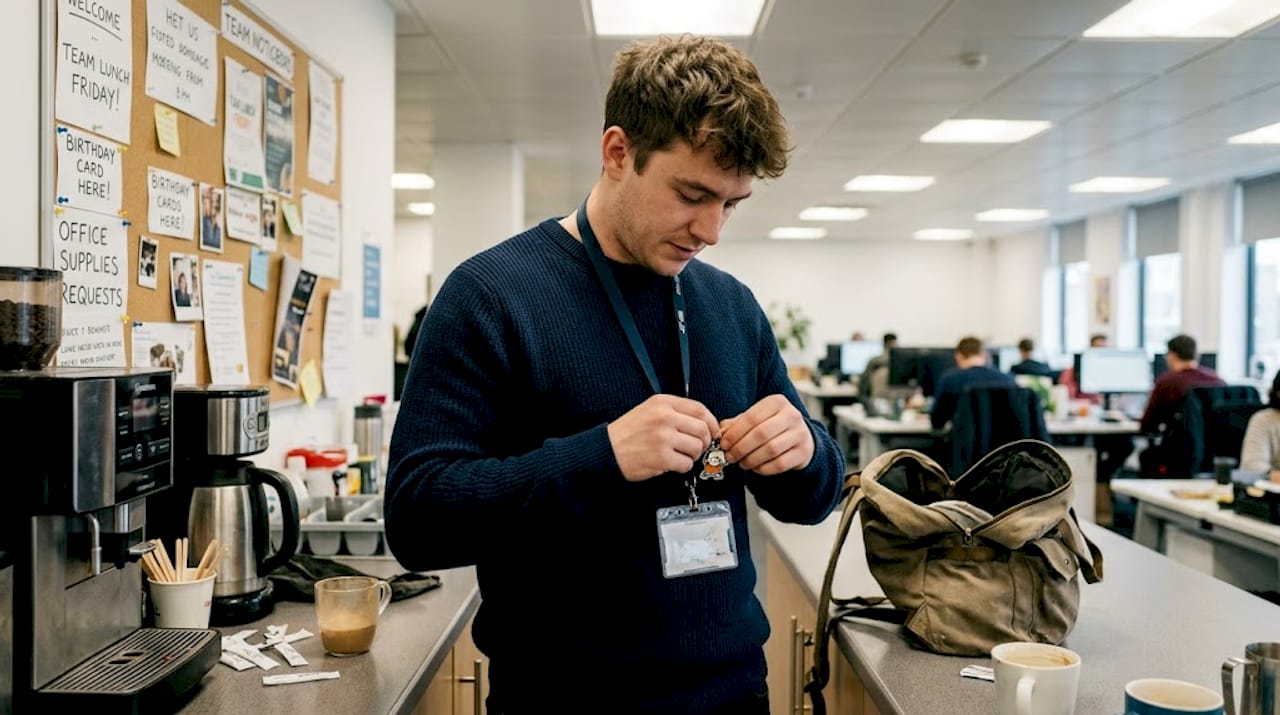
Custom-branded merchandise kept 14 months on average delivers thousands of impressions per item at just $0.003 per impression. That cost-per-impression figure beats almost every digital channel available today. Understanding the personalized merchandise benefits helps organizations allocate budget with confidence rather than guesswork.
| Metric | Custom designs | Generic items |
|---|---|---|
| Average retention period | 14 months | 2 to 4 months |
| Impressions per item | 1,000+ | Under 200 |
| Cost per impression | $0.003 | $0.015+ |
| Recipient sentiment | High emotional connection | Neutral to low |
The numbers tell a compelling story. Custom items stay in circulation nearly four times longer than generic alternatives, and they generate far more impressions at a fraction of the cost. For marketing teams working with fixed budgets, that efficiency matters enormously.
Three business benefits stand out most clearly:
- Brand recall: Distinctive, well-designed merchandise keeps your logo and message visible long after an event ends, reinforcing recognition every time the item is used.
- Audience engagement: Recipients who feel a personal connection to a piece of merchandise are more likely to share it, wear it publicly, or mention it in conversation, extending organic reach.
- Sustainability alignment: Investing in fewer, higher-quality custom pieces reduces waste compared to mass-ordering disposable generics that end up in landfills within weeks.
“The real power of custom promotional merchandise is not the first impression. It is the thousandth impression, delivered quietly over months of daily use.”
Those compounding impressions are why forward-thinking organizations treat custom merchandise as a media channel, not just a giveaway.
The mechanics of effective customization: Features that drive retention
With clear evidence that custom items outperform, the next step is understanding what actually makes a design effective.
Not all customization is equal. A logo slapped on a cheap keychain is technically custom, but it will not move the needle on retention or brand recall. Effective customization is intentional. It considers who will receive the item, how they will use it, and what emotional or practical value it delivers.
Personalization increases retention by 45%, utility features drive a 78% keep factor, and QR codes enable campaign tracking that connects physical merchandise to digital analytics. Those are not marginal improvements. They represent a fundamental shift in how merchandise performs.
Here is a step-by-step process for deciding which custom features match your campaign goals:
- Define your audience first. A corporate gift for a senior executive calls for different design choices than a trade show giveaway for general attendees. Personalization works best when it reflects the recipient’s identity or role.
- Prioritize utility. Items people use daily, like quality keychains, pins worn on bags, or magnets placed on desks, generate far more impressions than decorative pieces that get stored away.
- Integrate smart features. QR codes embedded in the design can link to event pages, product catalogs, or loyalty programs, turning a physical item into a digital gateway.
- Choose quality materials. Enamel, metal, and durable finishes signal that your brand values quality. Recipients notice, and they keep items that feel premium.
- Keep branding subtle but clear. Overcrowding a design with logos and text reduces perceived value. Let the design breathe, and let your brand identity speak through craft rather than volume.
| Personalization type | Impact on keep rate | Best use case |
|---|---|---|
| Name or department | +45% | Corporate gifts, employee recognition |
| Custom illustration | +30% | Events, cultural campaigns |
| QR code integration | +25% (plus tracking) | Trade shows, product launches |
| Utility-focused design | +78% | General promotional campaigns |
Exploring options like custom keychains for branding or personalized corporate gifts gives your team concrete starting points for matching design features to campaign objectives.
Pro Tip: Before finalizing any design, ask a small group from your target audience whether they would keep and use the item. Their honest feedback will reveal whether your design delivers genuine value or just looks good on a screen.
Custom designs versus generic: What’s the real difference?
Now, let’s clarify exactly how custom differs from generic options, drawing a practical comparison.
The surface-level answer is obvious: custom looks better. But the strategic difference runs much deeper. Generic items communicate that your organization values convenience over connection. Custom items communicate the opposite. They say you thought about the recipient, invested in quality, and cared enough to create something worth keeping.
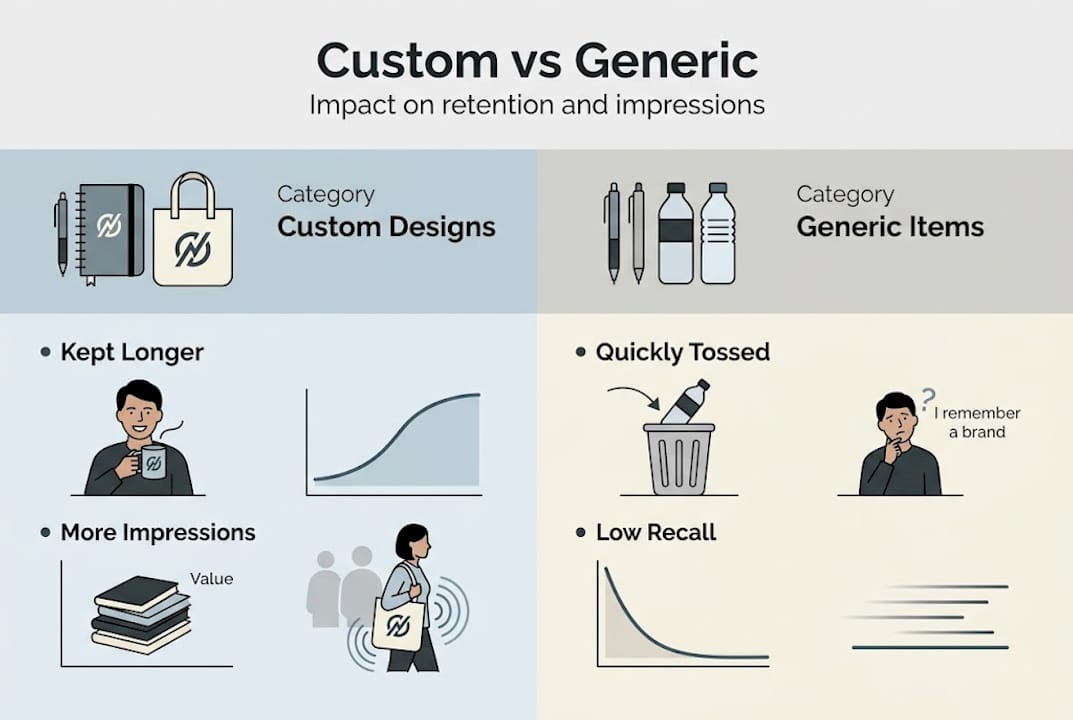
Quality custom designs create far more impressions per dollar than disposable generics, and that gap widens over time as custom items stay in circulation longer.
| Factor | Custom designs | Generic items |
|---|---|---|
| Retention | 14 months average | 2 to 4 months |
| Impressions per dollar | Very high | Low |
| Recipient sentiment | Valued, personal | Forgettable |
| Branding impact | Strong, lasting | Weak, fleeting |
| Perceived quality | Premium | Commodity |
Custom designs consistently outperform in situations where emotional resonance matters most:
- Corporate events and conferences: Attendees remember brands that gave them something genuinely useful or beautiful. A custom enamel pin commemorating a specific event becomes a collectible, not just a giveaway.
- Employee recognition programs: Personalized accessories tied to milestones or achievements carry emotional weight that generic items simply cannot replicate.
- Cultural campaigns and community initiatives: Items that celebrate shared identity, whether through cultural symbols, causes, or organizational values, build solidarity and deepen loyalty.
- Product launches and brand activations: Custom merchandise tied to a specific campaign creates a tangible artifact of the moment, extending the campaign’s life well beyond the event itself.
“When we received custom pins from a partner organization, they felt like a real gift, not just branded clutter. We still have them on our bags two years later.”
That kind of lasting presence is what meaningful custom accessories are designed to create.
Pro Tip: Avoid the common mistake of over-branding. Filling every inch of a design with logos and taglines signals insecurity, not confidence. A clean, thoughtful design with subtle branding will always outperform a cluttered one in both aesthetics and retention.
Beyond branding: Sustainability, ethics, and future trends in custom design
The impact of custom design goes deeper than branding. Let’s explore its role in sustainability and emerging trends your organization should know.
In 2026, organizations face growing pressure to align their marketing practices with their stated values around environmental responsibility. Promotional merchandise is no exception. The good news is that custom, high-quality items are inherently more sustainable than the generic alternatives they replace.
Promotional merchandise has an 8x smaller carbon impact per impression than digital advertising. That finding challenges the assumption that going digital is always the greener choice. A well-made enamel pin or keychain, used daily for over a year, delivers its impressions at a remarkably low environmental cost.
Organizations can strengthen their ethical positioning by making intentional sourcing choices:
- Recycled and sustainable materials: Opting for recycled metals, eco-friendly packaging, and responsibly sourced components reduces the environmental footprint of your merchandise program.
- Durable production standards: Items built to last reduce the cycle of replacement and disposal. Quality craftsmanship is not just a brand statement. It is an environmental one.
- Fair labor practices: Partnering with manufacturers who uphold fair labor standards ensures your merchandise reflects your organizational values from production to distribution.
Three trends are actively reshaping custom design in 2026:
- Eco-conscious design: Buyers are increasingly requesting sustainable materials and minimal packaging, pushing manufacturers to innovate in materials science and production methods.
- QR code digitization: Embedding QR codes into physical merchandise bridges the gap between tangible items and digital experiences, enabling real-time campaign tracking and personalized landing pages.
- Advanced personalization technology: AI-assisted design tools and on-demand manufacturing are making it easier and more affordable to create truly individualized items at scale, even for smaller organizations.
Understanding the lasting impact of souvenirs and custom accessories helps organizations see merchandise not as a cost center but as a long-term investment in relationships and brand equity.
Our take: Custom isn’t just better—it’s essential for meaningful engagement
Having covered the technical details, here is our perspective drawn from both data and direct experience working with organizations around the world.
We have seen firsthand what happens when organizations distribute generic merchandise at events. Recipients glance at it, maybe pocket it politely, and forget it exists within days. Contrast that with a beautifully crafted custom pin that tells a story, celebrates a shared identity, or marks a meaningful moment. Those items travel. They get worn, gifted, and talked about.
The data confirms what we observe in practice. But beyond the numbers, there is something more fundamental at stake. In a world saturated with digital noise and disposable content, a physical object that carries genuine meaning cuts through in a way that no banner ad ever will.
Organizations that invest in audience-focused personalization are not just buying better merchandise. They are building stronger relationships. The global custom pin impact we see from clients who prioritize thoughtful design confirms that custom is no longer a premium upgrade. It is the baseline for meaningful engagement in 2026.
If your organization is still defaulting to generic, now is the time to reconsider.
Connect with custom: Take your brand further
If you are ready to put these insights into action, here is how to elevate your brand with the right custom designs.
At PinPerfect, we make it straightforward to transform your concepts into custom accessories that your audience will genuinely value and keep. Whether you are planning a corporate event, launching a cultural campaign, or building an employee recognition program, our team collaborates with you from the first sketch to the final product.
Explore our full range of custom enamel pin options and discover how quality craftsmanship and thoughtful personalization can elevate your next campaign. Visit the PinPerfect store to browse designs, request a custom quote, or connect with our design team. Your brand deserves merchandise that works as hard as you do.
Frequently asked questions
How do custom designs improve promotional item effectiveness?
Custom designs sharply boost retention, usage, and brand recall. Branded items kept 14 months on average generate thousands of impressions, making them far more effective than generic alternatives that are discarded within weeks.
Which features make custom designs most powerful?
Utility, personalization like names or departments, and smart integrations such as QR codes all sharply increase how long recipients keep and use items. Utility features drive a 78% keep factor, while name personalization alone boosts retention by 45%.
Are custom promo items more sustainable than digital ads?
Yes. Promo items have an 8x smaller carbon impact per impression compared to digital advertising, making quality custom merchandise a genuinely eco-conscious marketing channel.
How can organizations ensure their custom designs are kept and used?
Focus on practical value, recipient personalization, and quality materials when planning your merchandise. Utility, personalization, and quality materials significantly increase the likelihood that recipients will keep and actively use your items.
Recommended
- Why use personalized accessories: meaning, identity, brand – PinPerfect
- How to create personalized corporate gifts that resonate – PinPerfect
- Why give custom souvenirs: create lasting impact – PinPerfect
- Why sell custom magnets? Boost brand visibility now – PinPerfect
- Understanding the Importance of Tailoring for Special Events - DressMeUpNY
- Why custom crystal chandeliers transform home decor – CrystalPlace