

Personalized keychain design guide for Israeli businesses
Generic keychains fail to capture attention because they lack cultural relevance and emotional connection. Israeli businesses and nonprofits lose valuable branding opportunities when promotional items don’t resonate with local audiences. This guide shows you how to design personalized keychains that integrate Israeli cultural themes while maximizing brand recall and event impact through strategic material selection, purposeful design workflows, and cost-effective bulk ordering.
Table of Contents
- Prerequisites: What You Need Before Designing Your Custom Keychain
- Step-By-Step Design Process: Integrating Branding And Israeli Cultural Themes
- Common Mistakes And How To Troubleshoot Them
- Order Timelines, Costs, And Measuring Success
- Partner With PinPerfect For Your Custom Israeli Keychains
- Frequently Asked Questions About Personalized Keychains
Key takeaways
| Point | Details |
|---|---|
| Define purpose first | Clear branding goals and cultural alignment drive effective keychain design and material selection. |
| Material impacts perception | Metal conveys premium quality, acrylic offers vibrant colors, and leather provides tactile warmth for different brand messages. |
| Workflow prevents waste | Following a structured design process with proofs and feedback loops eliminates costly production errors. |
| Cultural sensitivity matters | Consulting experts on Israeli symbols prevents misrepresentation and strengthens audience connection. |
| Metrics prove ROI | Track brand recall, engagement rates, and distribution efficiency to justify promotional budgets. |
Prerequisites: what you need before designing your custom keychain
Successful keychain design begins with clarity on purpose, influencing material choice, size, and design elements aligned to brand and cultural messages. Before you contact manufacturers or sketch ideas, establish foundational elements that prevent costly revisions later.
Identify your specific promotional objective. Are you building brand awareness at trade shows, rewarding donors at nonprofit galas, or creating employee appreciation gifts? Each goal demands different design approaches. Trade show keychains need bold logos visible from a distance, while donor gifts benefit from personalized details and premium materials.
Prepare professional artwork files early. Vector formats like .AI or .SVG ensure clarity when scaled to keychain dimensions, typically 1.5 to 3 inches. Blurry JPEGs create unprofessional results that damage brand perception. Work with a graphic designer if your team lacks vector expertise.
Select materials that match your brand positioning and usage context. Metal keychains communicate durability and premium quality, perfect for corporate clients and long-term branding. Acrylic enables vibrant colors ideal for youth organizations or cultural festivals. Leather adds tactile warmth suited to boutique brands or heritage themes. Review custom keychain materials to understand how each option affects cost and longevity.
Budget planning considerations
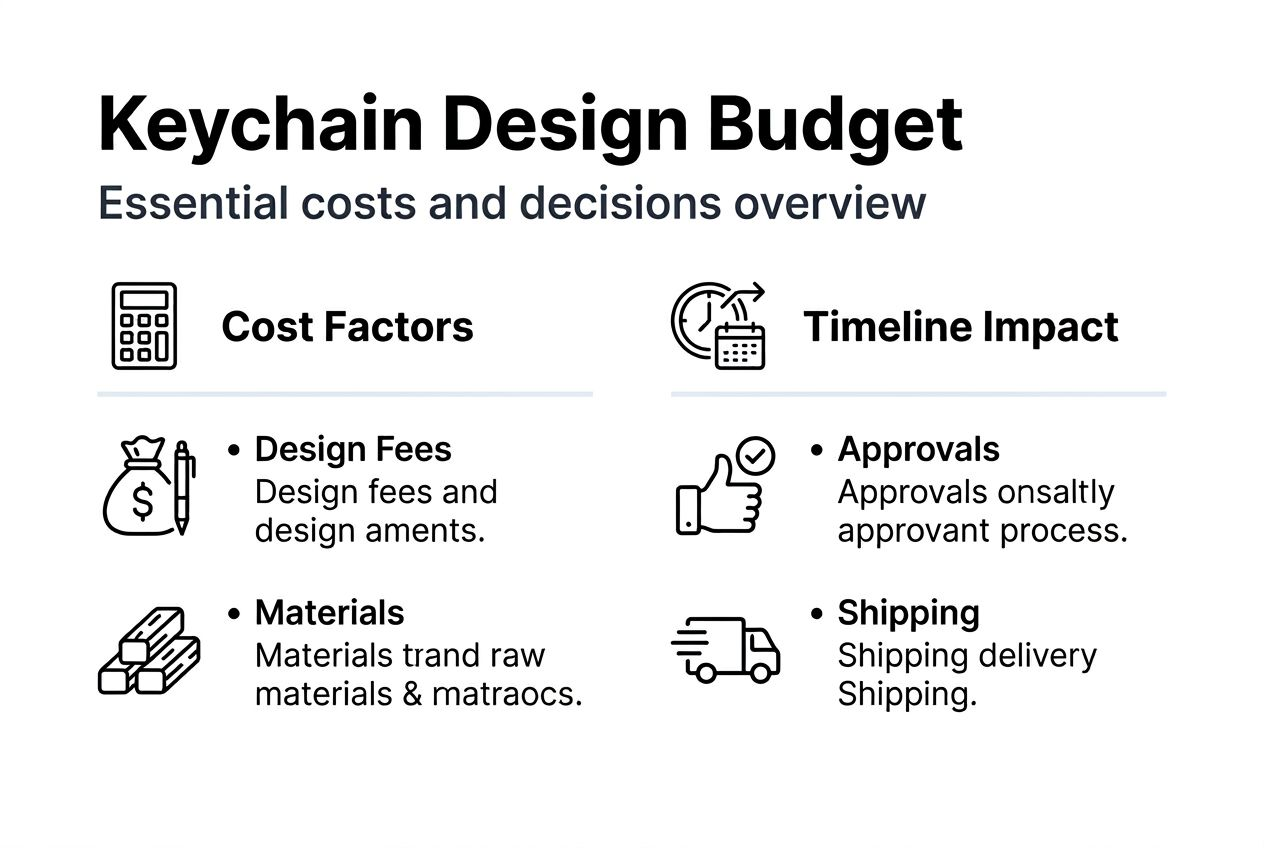
| Item | Cost Factor | Timeline Impact |
|---|---|---|
| Design services | $50-$200 for professional work | 3-7 days for revisions |
| Material selection | Metal costs 40% more than acrylic | No timeline effect |
| Quantity | 500+ units reduce per-unit cost by 30% | Larger orders add 5-10 days |
| Shipping | Free over 300 NIS in Israel | Express adds 2-3 days |
Set realistic timelines accounting for design approvals, production, and shipping. Rush orders cost 25-50% more and often compromise quality. Allow three weeks minimum for custom projects.
Pro Tip: Create a mood board with Israeli cultural references, color palettes, and competitor examples before designing. This visual reference streamlines feedback and ensures your team shares a unified vision. Apply lessons from promotional pins recall tips to maximize memory retention.
Step-by-step design process: integrating branding and Israeli cultural themes
Effective keychain design balances visual impact with cultural authenticity. Follow this workflow to create memorable promotional items that resonate with Israeli audiences while maintaining professional quality standards.
1. Define design goals with stakeholder input
Gather input from marketing, leadership, and cultural consultants. Align on three core objectives: primary message, target emotion, and desired action. Document these in a creative brief that guides every design decision.
2. Research culturally appropriate symbols
Israeli culture offers rich visual language, from ancient motifs to modern symbols. Incorporate elements like pomegranates symbolizing abundance, olive branches representing peace, or geometric patterns from traditional crafts. Consult cultural experts to ensure respectful representation, especially with religious symbols. Review creating cultural pins israel for proven approaches to cultural integration.
3. Select optimal materials and dimensions
Match materials to your brand personality and practical needs:
- Metal keychains: Best for corporate branding, law firms, tech companies needing premium perception
- Acrylic keychains: Ideal for youth programs, festivals, colorful brand identities
- Leather keychains: Perfect for boutique brands, heritage organizations, artisanal positioning
- Wooden keychains: Suited to environmental nonprofits, eco-conscious businesses
Standard dimensions range from 1.5 to 2.5 inches for pocket comfort. Larger sizes create visual impact but reduce daily portability.
4. Create vector artwork with production specs
Designs should utilize high-resolution vector graphics (.AI or .SVG) to ensure clarity and quality in final production of small-format keychains. Work in CMYK color mode for print accuracy. Limit detailed elements, as intricate designs become muddy at keychain scale. Use bold fonts minimum 8pt for legibility.
Include your logo prominently, typically occupying 30-40% of visible surface. Balance branding with cultural elements so neither overwhelms the composition. White space prevents visual clutter and improves professional appearance.
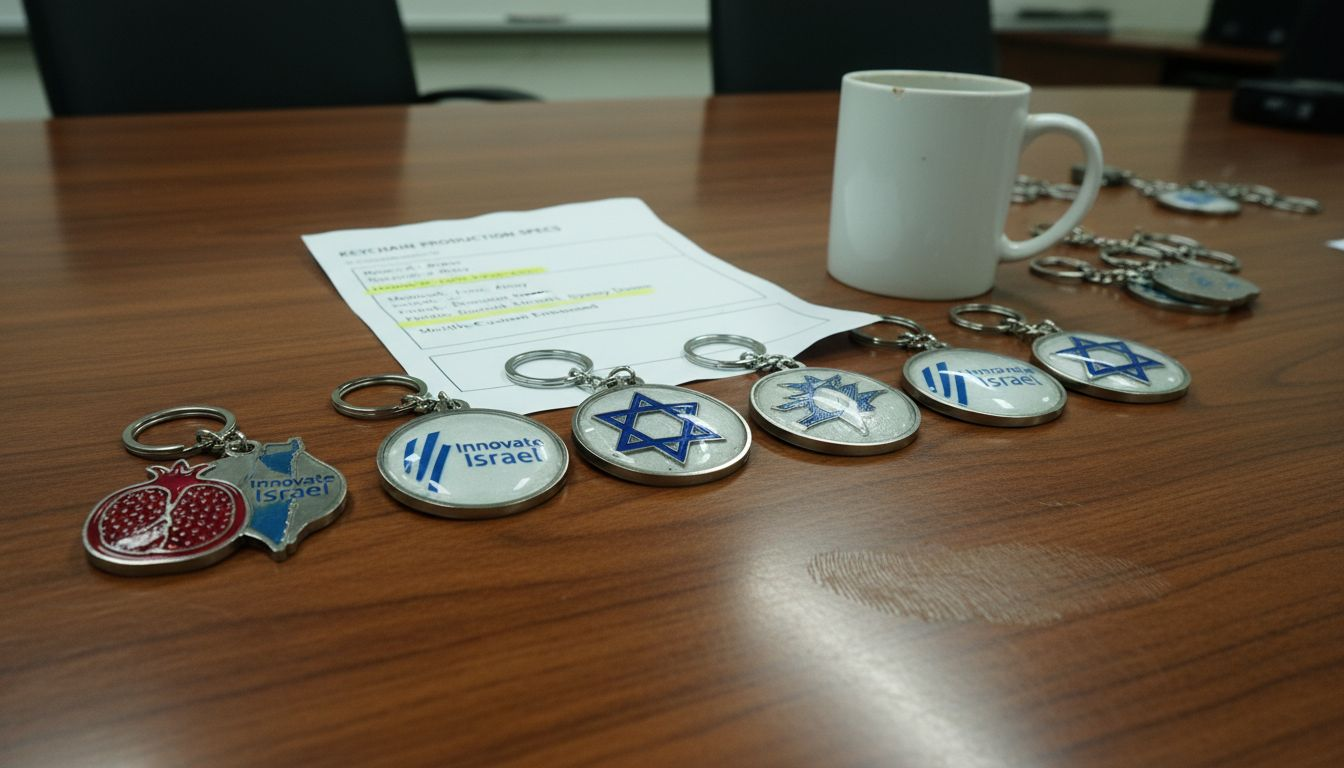
5. Consult manufacturers for feasibility review
Submit designs for technical evaluation before finalizing. Manufacturers identify production constraints like minimum line weights, color limitations, or attachment hardware conflicts. This consultation prevents design revisions after ordering. Follow the custom magnetic pin workflow approach adapted for keychains.
6. Request physical samples or digital proofs
Never skip the proof stage. Digital mockups reveal color accuracy and layout issues, while physical samples expose material quality and finishing details. Test samples with your target audience for feedback on size, weight, and visual appeal.
7. Incorporate feedback and approve production
Collect structured feedback from stakeholders and sample testers. Make final adjustments addressing clarity, cultural sensitivity, and brand alignment. Obtain written approval from decision makers before authorizing bulk production.
Pro Tip: Photograph your keychain designs next to common objects like pens or phones for scale reference. This helps stakeholders visualize actual size and prevents disappointment when products arrive smaller than expected.
Common mistakes and how to troubleshoot them
Even experienced marketers encounter design pitfalls that waste budgets and damage brand reputation. Recognize these frequent errors and apply practical solutions to maintain quality throughout your keychain project.
Overcrowded designs reduce impact
Cramming logos, taglines, websites, and cultural symbols into small spaces creates visual chaos. Avoid overcrowding the design with text or multiple images; ensure material matches durability needs; and request proofs to prevent quality issues. Limit text to essential information like brand name and one contact point. Prioritize visual hierarchy so the most important element dominates.
Solution: Create a hierarchy with one primary focal point occupying 40% of space, one secondary element at 30%, and remaining details filling background tastefully. Remove any element that doesn’t serve a clear purpose.
Culturally inappropriate symbol usage
Misusing religious symbols, historical references, or regional motifs alienates audiences and creates PR problems. Superficial cultural borrowing feels inauthentic and damages brand credibility.
Solution: Consult Israeli cultural advisors, historians, or community leaders when incorporating traditional symbols. Research the historical context and contemporary meaning of every cultural element. When uncertain, choose universally positive symbols like landscapes, food, or abstract patterns.
Material mismatches with brand positioning
Cheap plastic keychains undermine luxury brand messaging, while expensive metal options waste nonprofit budgets better spent on programs. Material choice communicates value perception before recipients read your message.
Solution: Align material quality with brand tier and audience expectations. Corporate clients expect metal or leather. Community events work well with acrylic. Educational programs benefit from durable but affordable options. Request material samples to evaluate quality firsthand.
Skipping prototype testing
Ordering 1,000 keychains based solely on screen mockups risks discovering flaws after production. Colors appear different in physical materials, sizes feel wrong in hand, and attachment hardware may malfunction.
Solution: Always order 5-10 samples before bulk production. Test samples for durability by attaching to key rings and carrying for one week. Share samples with target audience members for honest feedback on appeal and usability.
Ignoring production lead times
Rushing orders for last-minute events forces premium shipping costs and limits design iterations. Tight deadlines prevent fixing errors discovered in proofs.
Solution: Begin design process 6-8 weeks before needed date. Build buffer time for unexpected revisions, shipping delays, or quality issues requiring replacement batches.
Pro Tip: Create a pre-flight checklist covering color mode, file format, resolution, cultural review, material specs, and proof approval. Require sign-off on each item before submitting to manufacturers, reducing errors that escape notice until production completes.
Order timelines, costs, and measuring success
Understanding production economics and performance metrics transforms keychain campaigns from expenses into strategic investments. Plan budgets realistically and track results to optimize future promotional efforts.
Production timeline expectations
Typical bulk keychain orders require 1-3 weeks depending on quantity and customization complexity. Simple logo designs on standard materials ship faster than intricate cultural artwork on specialty finishes. Add one week for international shipping or two weeks for custom die cuts and unique shapes.
Domestic Israeli orders benefit from faster turnaround and lower shipping costs. Manufacturers offering free shipping over 300 NIS reduce total project costs significantly, making local suppliers attractive for budget-conscious organizations.
Cost structure and economies of scale
| Quantity | Per-Unit Cost | Total Investment | Best For |
|---|---|---|---|
| 100 units | $3.50 | $350 | Small events, testing designs |
| 500 units | $2.10 | $1,050 | Medium conferences, donor gifts |
| 1,000 units | $1.40 | $1,400 | Large trade shows, employee programs |
| 2,500 units | $0.95 | $2,375 | Multi-event campaigns, franchises |
Material selection significantly impacts pricing. Metal keychains cost 40-60% more than acrylic alternatives but convey premium quality justifying higher price points for corporate clients. Leather adds 30% to base costs while wooden options typically match acrylic pricing.
Customization complexity affects quotes. Single-color logos cost less than full-color artwork requiring advanced printing. Special finishes like epoxy coating or antique plating add $0.30-$0.75 per unit.
Success measurement framework
Track these metrics to evaluate campaign effectiveness:
- Brand recall rates: Survey recipients 30 days post-distribution asking unprompted brand name recognition
- Engagement actions: Monitor website traffic spikes, social mentions, or inquiry increases following keychain distribution
- Retention rates: Measure how many recipients still use keychains after 90 days through follow-up surveys
- Cost per impression: Divide total investment by estimated daily exposures based on usage frequency
- Complaint rates: Track quality issues, design confusion, or cultural sensitivity concerns requiring response
Successful campaigns achieve 60% brand recall after 30 days and 40% retention after 90 days. Compare these benchmarks against your results to identify improvement opportunities.
Pro Tip: Include unique QR codes or promotion codes on keychains linking to exclusive content or discounts. Track scan rates and redemptions to measure engagement more precisely than traditional metrics allow. Apply insights from promotional pins success metrics to refine your measurement approach.
Partner with PinPerfect for your custom Israeli keychains
Transforming cultural insights into compelling keychain designs requires specialized expertise and manufacturing capabilities. PinPerfect combines Israeli cultural knowledge with professional production quality, creating promotional items that authentically represent your brand while resonating with local audiences.
Our design team understands the nuances of Israeli symbolism, helping you select culturally appropriate elements that strengthen rather than stereotype your message. We offer comprehensive customization across materials, finishes, and attachment styles to match your specific branding objectives and budget constraints.
Explore our bestselling designs for inspiration or start customizing your unique keychain immediately. Whether you need 100 donor gifts or 2,500 trade show giveaways, our streamlined workflow ensures quality results delivered on schedule. Visit PinPerfect to discover how personalized keychains elevate your promotional strategy with cultural authenticity and professional craftsmanship.
Frequently asked questions about personalized keychains
How long does it take to receive custom keychains in Israel?
Production typically requires 10-15 business days for standard orders up to 1,000 units. Domestic shipping within Israel adds 3-5 days, while express options deliver in 1-2 days for urgent needs. Complex designs or specialty materials may extend timelines by one week.
What are the best materials for durable keychains?
Metal keychains offer superior longevity, withstanding daily use for years without degradation. Stainless steel resists corrosion in coastal climates, while zinc alloy provides affordable durability. Acrylic works well for indoor use but scratches more easily than metal alternatives.
How can I ensure my keychain design respects Israeli cultural themes?
Consult cultural experts or historians when incorporating traditional symbols, religious imagery, or historical references. Research the contemporary meaning and potential sensitivities surrounding each element. Partner with designers experienced in Israeli markets who understand local cultural nuances and can guide appropriate representation.
What is the minimum order quantity for custom keychains?
Most manufacturers set minimums between 50-100 units for custom designs. Smaller quantities incur higher per-unit costs due to setup fees and production inefficiencies. Ordering 250-500 units typically offers the best balance between affordability and manageable inventory for small to medium organizations.
How do I measure the success of my promotional keychain campaign?
Track brand recall through post-event surveys asking recipients to name your organization unprompted. Monitor website traffic increases, social media mentions, and direct inquiries correlating with distribution timing. Calculate cost per impression by dividing total investment by estimated daily exposures based on usage patterns and retention surveys.