

Limited edition merchandise: scarcity, value, and brand impact
TL;DR:
- Modern brands intentionally engineer scarcity through quantity and time limits to boost demand.
- Psychological triggers like FOMO and social proof drive urgency and perceived value in limited editions.
- Authentic storytelling and transparent practices are crucial for maintaining trust and long-term demand.
Most people assume “limited edition” simply means fewer units. That assumption misses the entire point. Today’s most successful brands treat scarcity as a precision tool, engineering demand with the same intentionality they apply to product design, pricing, and distribution. Whether you’re a business building a promotional campaign, a cultural institution curating meaningful accessories, or a collector chasing a meaningful piece, understanding how limited edition merchandise actually works changes how you buy it, sell it, and benefit from it. This article breaks down the mechanics, psychology, risks, and strategies that make limited edition merchandise one of the most powerful tools in modern brand building.
Table of Contents
- What defines limited edition merchandise?
- How scarcity and exclusivity drive demand
- Mechanics of limited edition campaigns: real-world strategies
- Risks, pitfalls, and legal nuances
- Why genuine scarcity and storytelling matter most
- Explore authentic limited edition merchandise and accessories
- Frequently asked questions
Key Takeaways
| Point | Details |
|---|---|
| Scarcity drives value | Restricting quantity or availability creates excitement, status, and higher demand. |
| Strategy matters | Careful campaign design, storytelling, and transparency protect brand reputation and increase ROI. |
| Watch for pitfalls | Fake scarcity, misleading claims, and immediate sellouts can undermine trust and long-term value. |
| Legal issues are real | Brands must disclose edition size and avoid misleading tactics to comply with law and build loyalty. |
| Authenticity wins | Collectors and businesses gain more when limited edition items are backed by real provenance and memorable stories. |
What defines limited edition merchandise?
At its core, limited edition merchandise is produced in restricted quantities or available for a limited time to create scarcity and exclusivity, driving demand through perceived uniqueness. But that definition only scratches the surface. What separates a truly strategic limited edition from a simple low-stock item is intentionality. Every element, from the production run size to the packaging to the serial number on the back, is designed to signal rarity and reward the buyer.
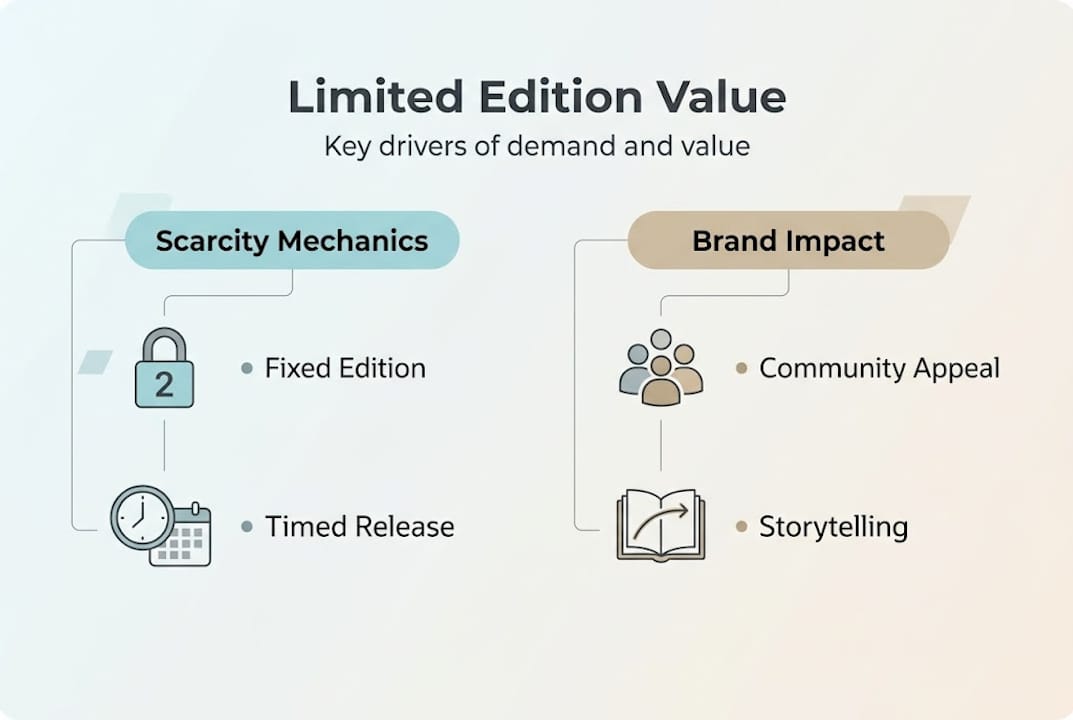
Scarcity comes in two primary forms:
- Quantity scarcity: Only a fixed number of units are produced. Once they’re gone, they’re gone. Think 500 serialized enamel pins celebrating a national holiday or a museum’s founding anniversary.
- Time scarcity: The item is available for a defined window, such as 72 hours or one event weekend, regardless of how many units remain.
The most effective campaigns often combine both. A run of 300 serialized pins available only during a three-day cultural festival, for example, layers urgency on top of rarity in a way that mass-produced giveaways never could.
How does this differ from mass-produced or special edition items?
| Feature | Mass produced | Special edition | Limited edition |
|---|---|---|---|
| Quantity | Unlimited | High but distinct | Fixed and finite |
| Availability | Ongoing | Extended | Time or quantity bound |
| Serialization | Never | Rarely | Often |
| Perceived value | Standard | Moderate | High |
| Resale potential | Low | Low to moderate | Moderate to high |
Special editions add features or design changes without restricting supply. A special edition product might be available for years. Limited editions, by contrast, create a closing window that forces a decision.
Serialization is one of the most powerful mechanics in the limited edition toolkit. When each unit carries a unique number, say 47 of 500, the buyer isn’t just purchasing a product. They’re purchasing a position in history. Personalization takes this further: a pin engraved with a company’s founding year or a collector’s initials transforms an accessory into an artifact. This is why storytelling merchandise consistently outperforms generic promotional items in both engagement and retention.
For businesses new to the space, a solid promotional merchandise guide can help frame where limited editions fit within a broader strategy. Limited editions aren’t a replacement for everyday promotional items. They’re a complement, one that sits at the top of the perceived value pyramid.
How scarcity and exclusivity drive demand
Scarcity doesn’t just affect behavior. It rewires it. The psychological mechanisms behind limited edition demand are well documented, and understanding them helps brands deploy scarcity responsibly rather than manipulatively.
Why limited edition works every time comes down to four core psychological triggers:
- FOMO (Fear of Missing Out): The awareness that others may acquire something you cannot creates powerful urgency. Social media amplifies this effect dramatically.
- Reactance theory: When people perceive that their freedom to choose is threatened (by dwindling supply), their desire for that choice intensifies sharply.
- Variable reward psychology: Unpredictability, like not knowing if a drop will sell out in minutes or hours, creates an addictive anticipation loop similar to what keeps people engaged with games.
- Social proof and status signaling: Owning a numbered edition signals taste, access, and belonging to an in-group. The item becomes a wearable credential.
The numbers behind the psychology are striking. Scarcity messaging boosts conversions by 30%, and urgency-driven tactics can lift sales by 20 to 50%. Trader Joe’s limited mini tote bags resold at multiples of their retail price. Influencer-led campaigns around limited drops have delivered up to 13x ROI. Event-specific merchandise tactics have increased overall merch sales by 28% in documented campaigns.
“The best limited edition campaigns don’t just create scarcity. They create a shared cultural moment that buyers want to be part of.”
Brands like Supreme have built entire business models around this mechanic. Their weekly drops sell out within minutes, not because of superior product quality alone, but because the scarcity is engineered into the brand’s DNA. Starbucks seasonal limited offerings trigger lines out the door and social media storms that money can’t buy through traditional advertising.
Storytelling pins and event-specific accessories tap into exactly this dynamic. A pin released exclusively at a corporate anniversary event doesn’t just commemorate the occasion. It signals that the wearer was there, transforming a small accessory into a badge of belonging.
Pro Tip: Layered scarcity consistently outperforms single-dimension scarcity. Combining a fixed quantity with a closing deadline and a personalization option (like a name or number) creates three separate psychological pulls on the buyer at once. For event merchandise campaigns, this approach can dramatically increase both sell-through rates and post-event brand recall.
Mechanics of limited edition campaigns: real-world strategies
Understanding why scarcity works is only half the equation. The other half is knowing exactly how to structure and execute a limited edition campaign that delivers on its promise.
Production run structures vary by goal. Fixed production runs typically span 50 to 1,000 units, with tiered numbering systems that reward early or lucky buyers. A typical tiered numbering structure might look like this:
- Units 1 to 10: Ultra-rare, often reserved for VIPs, founders, or charity auction winners
- Units 11 to 100: Collector tier, numbered and presented with provenance documentation
- Units 101 to 500: Standard limited run, serialized but widely available within the drop window
This structure creates micro-communities within the broader collector base. Someone who owns unit 7 of 500 has a fundamentally different story than the person who owns unit 312, even if the physical item is identical.
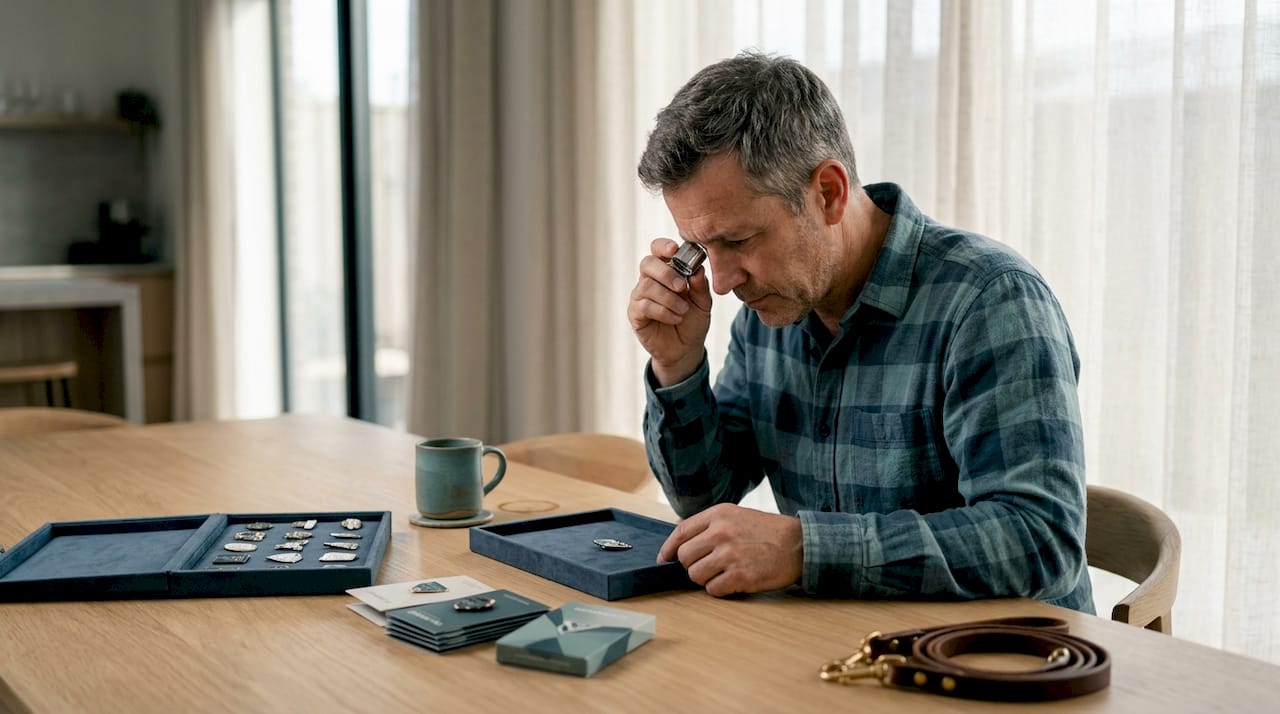
Micro-drops are a newer and increasingly popular format. Instead of releasing all 500 units at once, a brand releases 50 units per week over 10 weeks. This sustains conversation, keeps the algorithm fed with fresh content, and extends the campaign’s cultural footprint without diluting scarcity. The key to micro-drops is consistency and communication. Buyers need to know when the next drop happens and how to access it.
Serialization and NFC (Near Field Communication) technology are taking provenance verification to a new level. NFC chips embedded in merchandise allow buyers to tap their phone and instantly verify authenticity, view the item’s production story, and even access exclusive digital content. For bespoke merchandise aimed at premium collectors or corporate gifting, this level of authenticity infrastructure adds measurable perceived value.
Event-driven releases work especially well for cultural institutions. A museum releasing a limited run of 200 enamel pins tied to a blockbuster exhibition not only sells merchandise. It creates a collectible artifact that extends the exhibition’s cultural reach well beyond its physical walls. Museum merchandise that carries genuine provenance, a specific exhibition title, opening dates, and a serial number, consistently outperforms generic gift shop items in both revenue and visitor satisfaction.
Storytelling collaborations multiply the impact. When a limited edition product is created through a meaningful partnership, between a brand and an artist, a cultural institution and a community organization, or a corporation and a cause, the product carries the credibility of both parties. Buyers aren’t just getting a pin or a keychain. They’re getting a piece of a shared story.
Pro Tip: For highly desirable “hedonic” limited editions (items that trigger strong emotional desire), use raffles or waitlists instead of first-come-first-served sales. This approach reduces the frustration of immediate sellouts, rewards genuine fans over bots and resellers, and protects the brand relationship long-term. Personalized merchandise campaigns that use this model report significantly better post-drop sentiment scores.
Risks, pitfalls, and legal nuances
Powerful strategies carry real risks. Before launching a limited edition campaign, or investing in one as a collector, you need to understand where things go wrong and how to protect yourself.
The fake scarcity trap is the most common and most damaging mistake. Brands that quietly restock “sold out” limited editions without disclosure erode consumer trust rapidly and sometimes permanently. Buyers who paid a premium or waited in a virtual queue feel deceived, and that feeling travels fast on social media. Authentic scarcity requires commitment. If you announce 300 units, you produce 300 units and you never reopen the run without full transparency.
Key risks to understand before launching:
- Trust erosion from undisclosed restocks: Even a single incident can permanently damage a brand’s limited edition credibility.
- Immediate sellout backlash: Selling out in seconds may look like success, but hedonic LE immediate sellouts actually harm future repurchase rates unless paired with a fair-access mechanism like a raffle.
- Overproduction dilution: Producing far more units than demand justifies destroys the scarcity narrative and leaves the brand holding unsold inventory that undermines the “exclusive” positioning.
- Operations mismatch: A small business announcing a 10,000-unit limited drop with a 48-hour shipping promise is setting itself up for fulfillment failure and customer service chaos.
“Genuine scarcity builds culture. Artificial scarcity builds backlash.” This distinction, from collector value research, is the line every brand must walk carefully.
Legal nuances deserve serious attention. Advertising a product as “limited edition” when supply is effectively unlimited can violate consumer protection and advertising laws in multiple jurisdictions. Misleading “limited” claims invite regulatory scrutiny and civil liability. Additionally, brands that produce a limited edition item and then abandon the associated trademark without re-use risk trademark abandonment claims, a less obvious but very real legal exposure.
For collectors, the risks are financial. Artificial scarcity, restocks, and re-releases can destroy the resale value of items purchased at a premium. Before investing in any collectible, verify the edition size, the brand’s track record on honoring scarcity, and the provenance documentation provided with the item. An item sold as “1 of 100” should come with something that proves it.
Pro Tip: Always disclose edition size upfront, in the product listing, on the item itself when possible, and in all marketing materials. Transparency is not a weakness. It’s the foundation that makes scarcity credible and valuable to buyers.
Why genuine scarcity and storytelling matter most
At PinPerfect, we’ve seen what separates limited editions that become cherished artifacts from those that generate one news cycle and then disappear. The difference is almost never the quantity. It’s the story behind it.
Engineered scarcity without authentic meaning is a gimmick. Buyers are sophisticated enough to feel the difference between a brand that manufactured exclusivity for a sales boost and one that created something genuinely worth owning. The brands and institutions that build lasting demand around limited releases, year after year, do so because their scarcity is grounded in real value: a meaningful cultural moment, a genuine collaboration, a design with provenance and purpose.
For collectors, this means prioritizing narrative over rarity. An item numbered 1 of 10 with no story is worth less, in every meaningful sense, than a thoughtfully crafted piece from a run of 500 with clear provenance and genuine cultural significance. Storytelling merchandise that connects to identity, memory, or values holds its meaning long after the hype fades.
Our belief is simple: exclusivity should be earned by quality and meaning, not manufactured by artificial constraint. When those two forces align, a limited edition accessory stops being a product and starts being a story that people carry with them.
Explore authentic limited edition merchandise and accessories
Whether you’re ready to launch your first limited edition campaign or searching for a meaningful piece to add to your collection, the starting point is always authenticity.
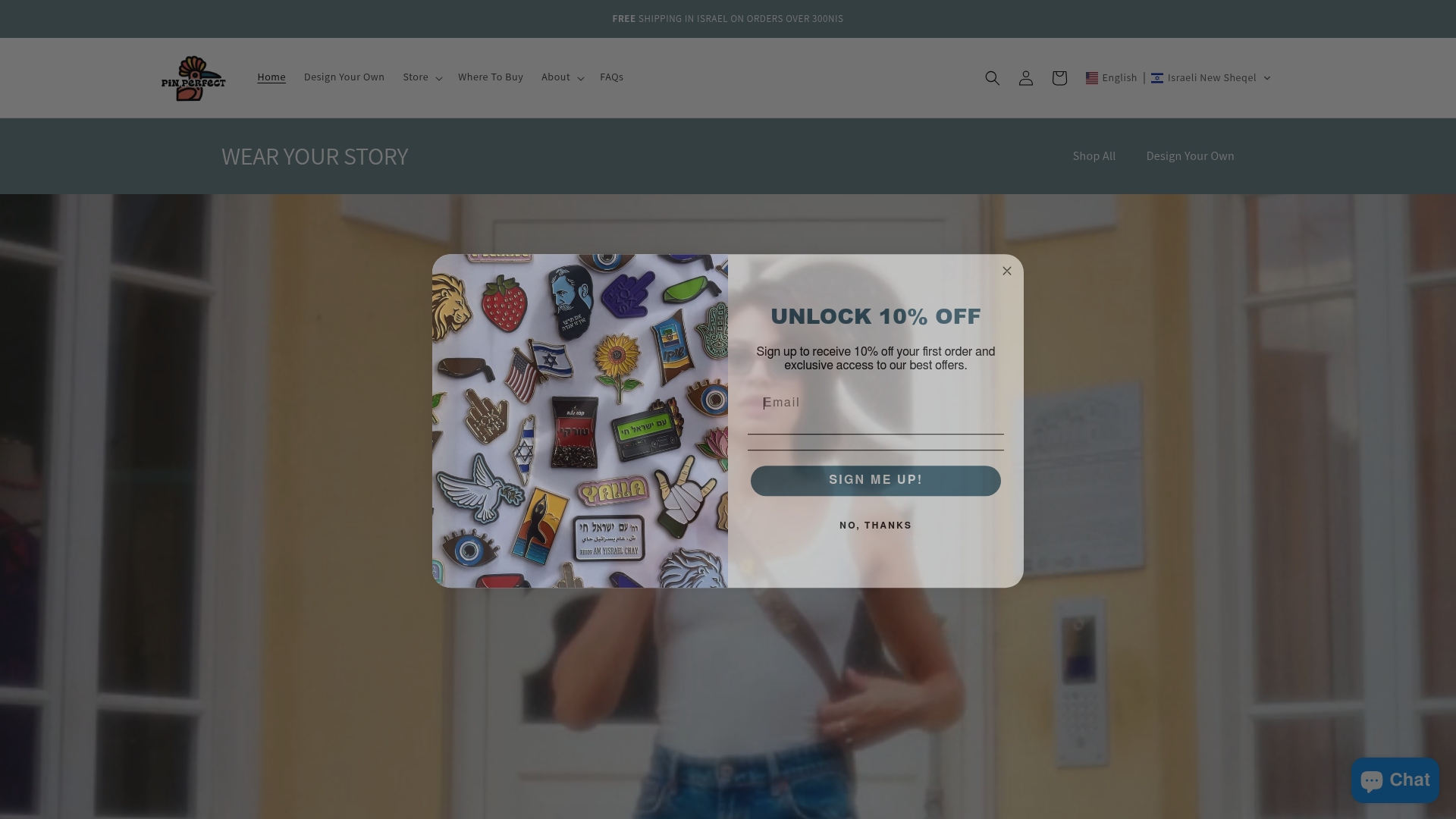
At PinPerfect, every piece we create is built around a genuine story. Our Israel flag pin is a meaningful example: a carefully crafted enamel accessory that carries cultural significance and solidarity in every detail. It’s exactly the kind of piece that transforms a simple accessory into a statement of identity and belonging. Explore our full range of custom pins, keychains, and magnets at PinPerfect, where meaningful design and authentic provenance come together for brands, institutions, and collectors who demand more than ordinary merchandise.
Frequently asked questions
How is “limited edition” different from “special edition”?
Limited edition refers to a restricted quantity or time window, creating genuine scarcity, while special edition may simply add design features or packaging without any supply constraint.
What are the benefits for brands launching limited edition merchandise?
Scarcity messaging boosts conversions by 30% and can lift sales by 20 to 50%, while also building community loyalty and brand status, especially when paired with compelling storytelling.
What legal risks come with marketing merchandise as “limited edition”?
Misleading “limited” claims can violate advertising laws and trigger regulatory action, and brands risk trademark abandonment if they produce a limited edition item and fail to continue using the associated mark.
How can collectors verify authenticity and value of limited edition items?
Look for serialization, provenance documentation, and brand transparency about edition size; avoid items where the history, production numbers, or manufacturer are unclear.
Does immediate sellout guarantee success?
No. Immediate sellouts can actually harm future repurchase rates and brand perception unless the brand uses fair-access mechanisms like raffles and communicates transparently throughout the process.