

How employee recognition pins drive engagement and retention
Most HR leaders assume that a well-configured recognition software platform is enough to make employees feel genuinely valued. The data says otherwise. Tangible recognition outperforms digital-only approaches when it comes to lasting memory, pride, and retention. Custom enamel pins, worn on a jacket or displayed on a desk, do something an e-card simply cannot: they create a permanent, visible symbol of achievement. This article walks you through the research, the program structures, and the practical steps to build a recognition pin strategy that actually moves the needle on engagement and retention.
Table of Contents
- Why symbolic awards matter: Beyond software and e-cards
- Business outcomes: The measurable impact of recognition pins
- When and how to use recognition pins for maximum impact
- Nuances and best practices: Making pin recognition meaningful for all
- Next steps: Launch your pin recognition program with confidence
- Frequently asked questions
Key Takeaways
| Point | Details |
|---|---|
| Symbolism matters | Physical pins are up to 24 times more memorable and engaging than digital recognition alone. |
| Boost retention and ROI | Pin programs can cut turnover by 31 percent and save millions in talent costs. |
| Personalization increases value | Tailoring pins by role, event, or story drives deeper meaning for all generations. |
| Equity and authenticity | Ensure programs are inclusive, personalized, and presented meaningfully for maximum effect. |
| Measure and improve | Track engagement and turnover to refine and prove your pin program’s impact over time. |
Why symbolic awards matter: Beyond software and e-cards
Digital recognition tools are convenient, scalable, and easy to track. But convenience is not the same as impact. When an employee receives a digital badge or a points notification, the moment is fleeting. There is no object to hold, no symbol to wear, and no story to tell a colleague. The recognition evaporates as quickly as the next Slack message arrives.
Physical pins work differently because they activate a set of deep psychological triggers that digital tools simply cannot reach. A pin worn on a lanyard at a company event signals status to peers without a single word being spoken. It communicates belonging, achievement, and organizational identity all at once. That is a lot of work for a small piece of metal.
Here are the core psychological triggers that well-designed recognition pins activate:
- Status: A visible award signals rank and accomplishment within the group
- Community: Shared pins create an in-group identity among recipients
- Achievement: A tangible object anchors the memory of the accomplishment
- Belonging: Wearing a company symbol reinforces organizational connection
- Brand association: Custom designs tie personal pride to the company’s identity
The generational data makes this even more compelling. Younger employees value symbolic items 3x more than older cohorts, and personalized awards can increase perceived recognition impact by up to 24 times compared to generic gifts. Gen Z and Millennials, who now make up the majority of the workforce, are not just tolerating symbolic awards. They are actively seeking them out and displaying them.
“Recognition is not a program. It is a culture. And culture needs artifacts.”
Consider a mid-size tech company that replaced its annual gift card program with custom achievement pins tied to project milestones. Within one quarter, managers reported that employees were proactively asking about the criteria to earn the next pin tier. That kind of behavioral shift is hard to manufacture with a points dashboard. Research also shows that pins boost event engagement and recall by as much as 50%, making them especially powerful at all-hands meetings, conferences, and onboarding events.
Business outcomes: The measurable impact of recognition pins
Symbolism is compelling, but you need numbers to justify a budget line. The business case for recognition pins is stronger than most HR leaders realize, and the cost of inaction is significant.
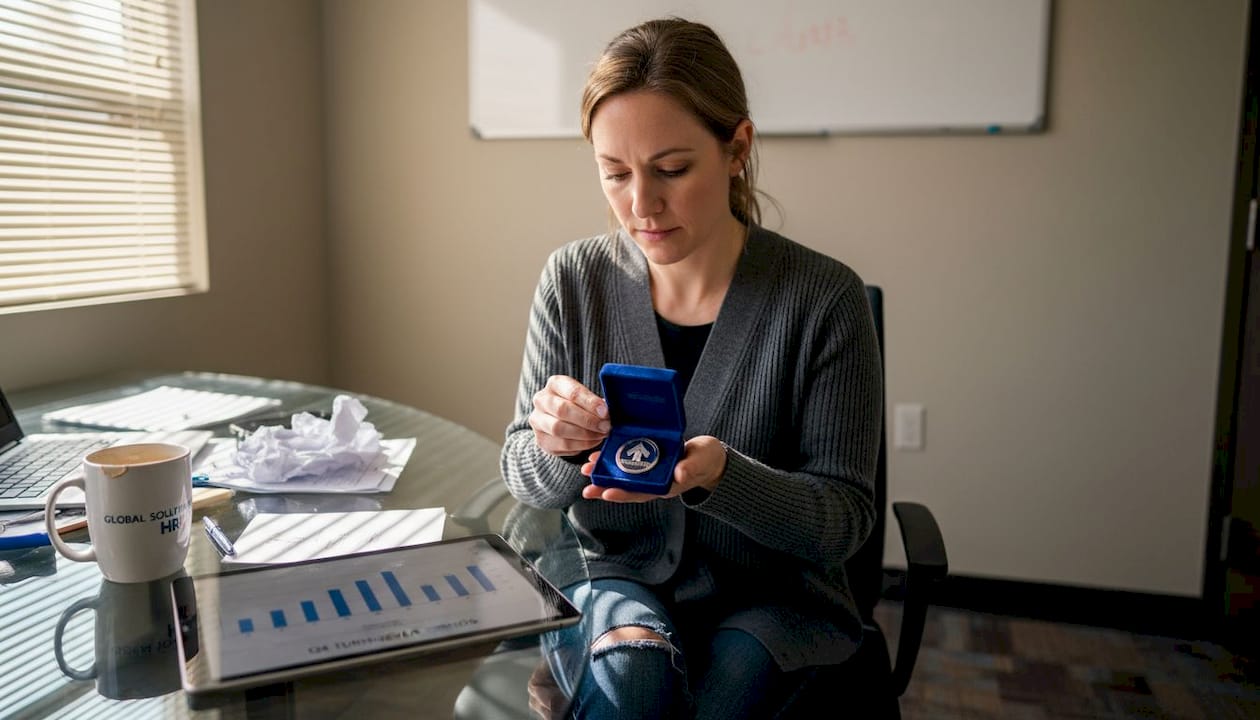
Effective recognition programs reduce voluntary turnover by 31% and can save an organization with 10,000 employees approximately $16.1 million per year. Employees in high-quality recognition environments are 45% less likely to leave within two years, and those who feel genuinely recognized are nine times more engaged than their unrecognized peers. These are not marginal gains. They are structural advantages.
Real organizations are seeing this play out. Lineage, a large logistics company, reduced attrition by 20 to 30% after overhauling its recognition approach to include custom awards. The company also found that personalized awards helped managers articulate value more clearly and reduced the administrative burden of running recognition programs.
| Metric | Without effective recognition | With effective recognition |
|---|---|---|
| Voluntary turnover rate | High (industry average) | Reduced by up to 31% |
| Annual cost savings (10k employees) | Baseline | Up to $16.1M saved |
| Likelihood to stay 2+ years | Baseline | 45% more likely |
| Employee engagement level | Low to moderate | Up to 9x higher |
| Attrition (Lineage case study) | Baseline | Reduced 20 to 30% |
Pro Tip: Pair your pin program launch with a short engagement survey and track turnover data quarterly. After two to three cycles, you will have internal ROI data that makes the next budget conversation straightforward. The benefits of collecting custom pins extend beyond the individual recipient to team morale and brand perception across the organization.
When and how to use recognition pins for maximum impact
Knowing that pins work is one thing. Knowing when and how to deploy them is what separates a forgettable token from a culture-defining moment. The program type, the presentation context, and the design all matter enormously.
| Program type | Key benefit | Common pitfall |
|---|---|---|
| Years-of-service awards | Builds long-term loyalty | Generic designs feel impersonal |
| Employee of the month | Creates visible role models | Can feel competitive or exclusive |
| Achievement badges | Ties recognition to specific goals | Criteria must be clear and fair |
| Peer-to-peer recognition | Builds team culture | Needs structure to avoid favoritism |
| Onboarding welcome pins | Accelerates belonging | Must feel earned, not just handed out |
| Special event pins | Marks shared experiences | Loses impact without a story attached |
Presentation is where most programs either succeed or fail. Handing a pin to someone in a hallway is not recognition. It is a transaction. The moment needs a story: what the person did, why it mattered, and how it connects to the team’s values. Budget around 1% of payroll for your recognition program, and invest a meaningful portion of that in the presentation experience, not just the physical item.
Here is a step-by-step approach to launching an effective pin program:
- Define your criteria clearly before ordering a single pin. Vague programs breed cynicism.
- Start with a pilot in one department or team to test the design and delivery process.
- Design with intention. Work with a specialist to create pins that reflect your brand and the specific achievement, not just your logo.
- Train managers on how to present pins with a story. A two-minute script makes a significant difference.
- Announce publicly at a team meeting or company event to amplify the social signal.
- Measure engagement with a short survey two to four weeks after the first awards cycle.
- Iterate and scale based on feedback before rolling out company-wide.
For teams ready to move from concept to production, ordering custom pins globally is more accessible than most planners expect. A solid custom branding pins guide can walk you through design choices, finish options, and minimum order quantities before you commit to a design direction.
Nuances and best practices: Making pin recognition meaningful for all
A pin program that works beautifully for your headquarters team can fall completely flat for remote employees or frontline workers if you do not design for equity from the start. This is where many well-intentioned programs stumble.
Personalization is the single biggest lever you have. A pin that reflects a specific achievement, a team’s identity, or a cultural moment within the organization lands differently than one that just carries the company logo. Deskless and distributed workers especially benefit from portable, physical recognition because they often miss the ambient social signals that office-based employees receive daily. A pin they can wear on a uniform or display at a workstation travels with them in a way that a digital notification never will.
The 2025 State of Employee Recognition Report is clear: personalization, equity, and in-person delivery are the three factors that most consistently elevate recognition from a nice gesture to a meaningful experience. Pair physical pins with digital announcements to extend reach for hybrid teams without sacrificing the tangible impact.
Research from Awardco shows that authentic, symbolic recognition drives engagement improvements of 4 to 12 times compared to generic or infrequent recognition. That range is wide because execution matters. Programs that feel authentic and personal land at the high end. Programs that feel like checkbox exercises land at the low end.
Best practices for building an equitable pin program:
- Audit across departments: Ensure criteria and frequency are consistent for comparable roles, not just headquarters teams
- Include frontline and remote staff in the design process so the pins reflect their experience
- Vary pin designs by achievement type so recipients can distinguish their accomplishments visually
- Ship directly to remote employees with a handwritten note from their manager
- Avoid recency bias by tracking nominations over time, not just at review cycles
- Tie designs to company values so every pin reinforces the behaviors you want to see more of
Pro Tip: Before launching company-wide, run a 30-minute manager training session focused on the storytelling moment. Managers who can articulate why a pin is being awarded, not just that it is being awarded, produce measurably stronger engagement responses from recipients. For teams exploring non-pin formats, a custom magnetic pin workflow offers a practical alternative for environments where traditional pin backs are not practical. Understanding the broader benefits of personalized merchandise can also help you build a more complete recognition toolkit beyond pins alone.
Next steps: Launch your pin recognition program with confidence
The research is clear, the frameworks are proven, and the business case is compelling. What most organizations need now is a reliable partner to translate strategy into a physical product that employees will actually be proud to wear.
At PinPerfect, we work directly with HR teams and event planners to design custom recognition pins that reflect your brand, your values, and the specific achievements you want to celebrate. From first sketch to final delivery, our team handles the details so you can focus on the moments that matter. Explore our employee recognition pins to see what is possible, or visit PinPerfect’s custom pin solutions to start a conversation with our design team. Whether you are launching a pilot program or scaling recognition across a global workforce, we have the experience and the production capacity to support you.
Frequently asked questions
How do employee recognition pins improve retention?
Recognition pins are part of high-quality recognition programs that make employees 45% less likely to leave within two years, directly reducing voluntary turnover and its associated costs.
What types of programs use employee recognition pins?
Common programs include years-of-service awards, employee-of-the-month, and achievement badges presented at team events or company milestones.
Do custom pins work for distributed or remote teams?
Yes. Portable pins benefit deskless workers significantly, and shipping pins directly to remote employees paired with a digital announcement preserves both the tangible and social dimensions of recognition.
What is the best way to present recognition pins?
In-person presentation with a specific story about the achievement has the strongest impact. For hybrid teams, pair in-person delivery with a digital announcement to maximize reach without losing the personal moment.
How much should I budget for a recognition pin program?
Industry best practice is to allocate 1% of payroll to recognition programs, which provides enough runway to design quality pins, train managers, and measure outcomes over multiple cycles.